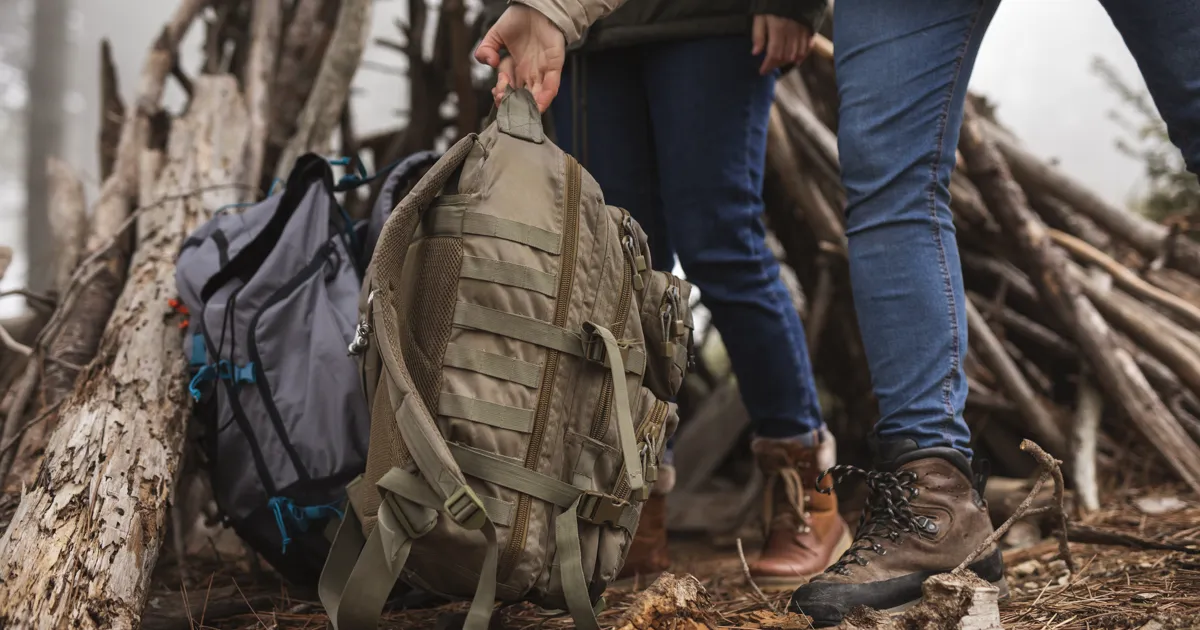
War Evacuation Backpack 2026: What to Pack
Build your plan for Conflict
Free, no sign-up, takes 5 minutes.
Quick answer: A war evacuation backpack should hold 6 liters of water per person, food for 72 hours that needs no cooking, laminated documents, cash in small bills, a battery or crank radio, an LED headlamp, a basic first aid kit with your medication, layered warm clothing, an emergency blanket and a multitool. Maximum weight: 12 to 15 kg (20% of your body weight).
In March 2026, the government of Cyprus did something few European governments had done in a long time: it asked its citizens to keep a backpack ready to grab and run. This wasn’t a PR exercise. A drone had struck RAF facilities at Akrotiri (a British Sovereign Base Area) and tension across the eastern Mediterranean had been simmering for weeks. The United States raised its travel advisory to “reconsider travel to Cyprus.” The island sits 250 kilometers from Syria.
That week, the question going around wasn’t “could this happen to me?” It was a lot more concrete: if I had to leave the house in ten minutes, what do I put in an emergency backpack for war or conflict?
This guide answers exactly that. Without alarm or exaggeration. The same backpack that prepares you for a conflict works for a flood, a wildfire or a prolonged supply breakdown. And across Europe, the last few years have made it clear you don’t have to look far to need one.
Why Cyprus and Europe Are Talking About Emergency Backpacks
Cyprus isn’t the only case. Since 2025, the European Commission has been urging member states to encourage their citizens to keep a 72-hour kit ready. Sweden, Germany and the Baltic states had campaigns running well before that. France published its own guide. Spain updated its Civil Protection recommendations.
The common thread across all these initiatives is the same: emergency services need time to organize. During those first hours, which are often more than we imagine, the person who has to handle the basics is you.
The Cypriot case adds a specific nuance: the backpack has to be ready to physically carry to a shelter. Not just to ride things out at home. That changes what you prioritise.
If you want to understand the difference between a home kit and an evacuation backpack, you’ll find the breakdown in our emergency kit for civil conflict.
The Difference Between the Home Kit and the Evacuation Backpack
A home kit can weigh whatever you like. Two weeks of water, a month of tins, a generator in the storage room. None of it matters because you don’t have to carry it out.
The evacuation backpack is another story.
It has to hang off your back while you walk fast, climb stairs or hold a child by the hand. The limit that survival experts and the Red Cross stick to is clear: no more than 20% of your body weight, around 12 to 15 kg for a fit adult. Go over that and you’ll be dropping things along the way.
There’s a quick test to check before you ever need it: load the backpack and run for two minutes. If you regret carrying it within the first minute, you’re packing too much.
What to Pack in a War Evacuation Backpack — The Complete Checklist
Quick list, war evacuation backpack (per person):
- Water: 6 liters in bottles + purification tablets
- Food: 72 hours of no-cook food (1.2–1.5 kg)
- Documents: ID, health card, small cash, medical report
- Battery or crank radio with USB
- LED headlamp
- Charged power bank (min. 20,000 mAh)
- Basic first aid kit + chronic medication with prescription
- Layered warm clothing (2 days) + emergency blanket
- Waterproof jacket or poncho
- Multitool, lighters (x2), duct tape, whistle
Survival schools, the European Commission and the Cypriot government guidance all agree on the basics. Here’s each category with the details.
Water and Purification
The minimum: three liters per person per day. For 72 hours that’s nine liters, nine kilos in water alone. The practical solution: carry six liters in bottles and a backup purification system for the rest.
Purification tablets are the lightest option there is. Micropur Forte run around 10 euros on Amazon and treat one liter per tablet in 30 minutes at room temperature. When the water is cold, they can need up to two hours. And here’s something that surprises a lot of people: they don’t remove sediment. If the water is cloudy, you have to filter it first — a dense cloth works.
For situations where weight is critical, the Sawyer Mini filter is a compact alternative that weighs 50 grams and filters up to 100,000 liters. It fits in any side pocket.
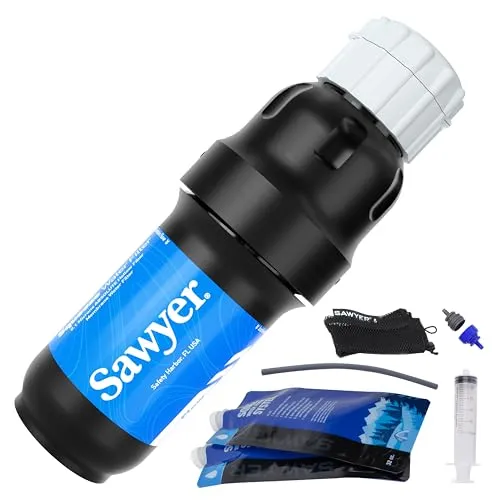
Sawyer PointOne Squeeze Filtration System
Filters up to 1,000,000 liters, removing 99.99999% of bacteria and protozoa. Weighs under 90 grams
Relying on tablets alone with no reserve water isn’t a plan. If it takes you more than 72 hours to reach somewhere safe, you need options.
Food for 72 Hours
The rule: 2,000 calories per person per day, in things that need no cooking.
What works well:
- Tins with a pull-tab lid (no can opener)
- Energy bars
- Nuts, dried fruit
- Oat biscuits or crackers
What doesn’t work: freeze-dried food that needs boiling water, because in a real evacuation you may not have a fire. Glass jars are out too.
The weight of three days of well-chosen food comes to 1.2–1.5 kilos for an adult.
Essential Documents
The section people neglect the most and that causes the most trouble later.
Those evacuated from the 2024 Valencia floods who carried laminated documents could identify themselves and apply for aid without delays. Those who didn’t waited days.
The minimum:
- ID or passport: original plus a laminated copy in a waterproof bag
- Health or insurance card
- Medical report if you take chronic medication
- Cash in small bills: 5, 10 and 20 euros. ATMs collapse in widespread outages
- A digital copy in the cloud: your phone can get wet, lost or broken
A sealed waterproof bag costs under 2 euros and protects all of this.
Communication and Lighting
The battery or crank radio is the single most important item in the whole war evacuation backpack. Not your phone.
In large-scale crises, mobile networks collapse. AM/FM radio keeps working as long as stations are broadcasting, and public broadcasters have backup generators. Look for a model with a USB input to charge your phone. You can find them for 25–40 euros on Amazon, weighing under 400 grams. One minute of cranking gives 20 to 30 minutes of listening.
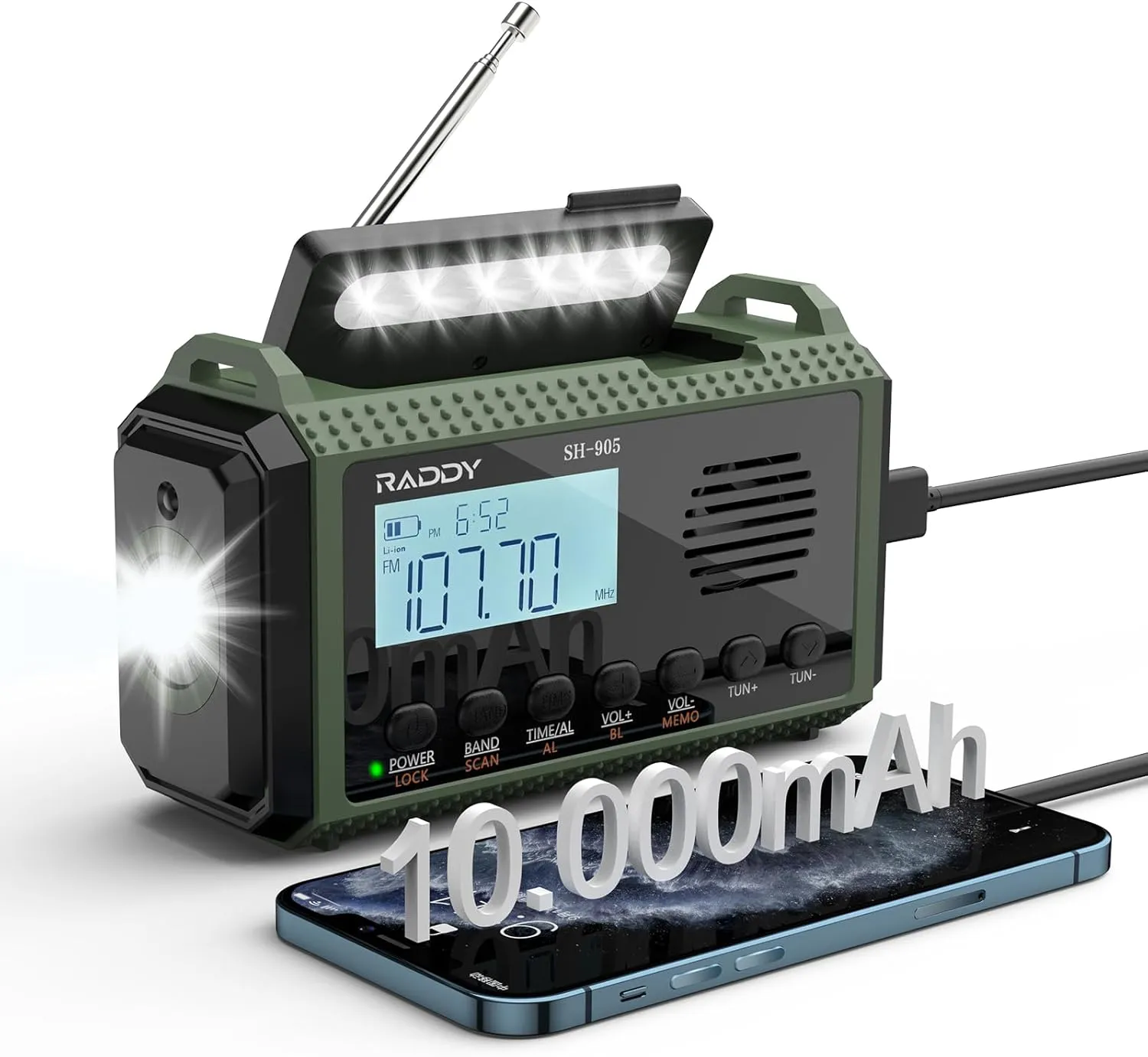
Raddy SH-905 Solar Radio 10000mAh
Emergency radio with a 10,000 mAh battery. Solar, crank and USB charging. Receives AM/FM/SW and charges your phone
The rest of the communication block:
- LED headlamp: hands free for whatever you need
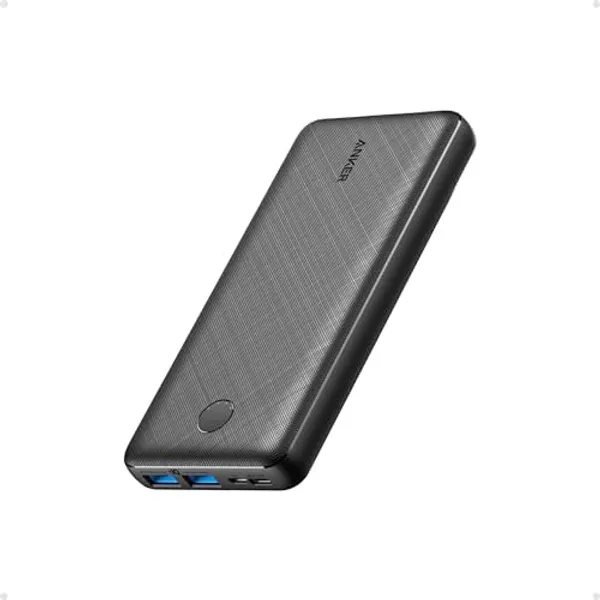
Anker PowerCore 20000mAh USB-C
20,000 mAh to charge your phone 4–5 times. Essential when there's no power for hours
- A secondary prepaid phone: data contracts can drop before voice ones do
First Aid and Medication
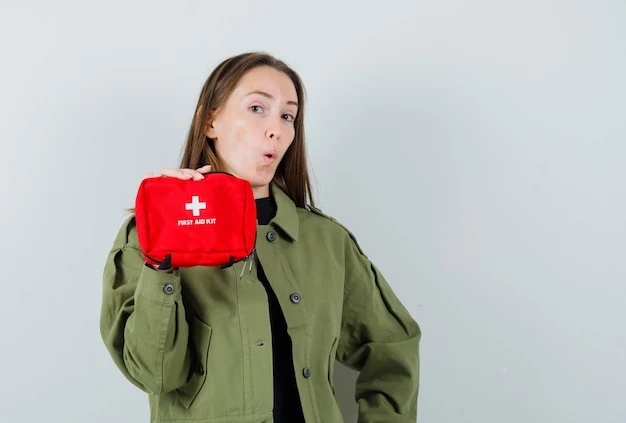
The basics: antiseptic, bandages, surgical tape, painkillers (paracetamol and ibuprofen), oral rehydration salts, tweezers.
The rule with no exceptions: you carry exactly the medication you take, with a laminated prescription. If any medicine needs refrigeration, talk to your doctor about alternatives before you need that conversation mid-emergency.
An oral antihistamine takes up no space and can save you a real scare in unfamiliar surroundings.
Clothing and Protection
The principle: two days of layered clothing, not a full outfit per day.
What you include:
- A change of underwear
- A warm layer (light fleece)
- A compact waterproof jacket or poncho
- Wool or thermal socks
- A compact emergency blanket: 80 grams, under 3 euros, can be decisive on a cold night
The footwear you have on at the moment of evacuating is critical. The Valencia flood evacuations happened in the early hours. Hard-soled footwear within reach of the bed — a detail that doesn’t seem important until it is.
Basic Tools
- Multitool: knife, screwdriver, can opener in a single object
- Two lighters: at least one in an outer pocket
- Large bin bags: waterproof the contents, collect rainwater, double as a poncho in a pinch
- Duct tape: repairs, sealing, improvising
- Whistle: signalling when you can’t shout or visibility is poor
Which Backpack to Buy for Your Evacuation Kit
Before you pack anything, you need the container. The right backpack is the difference between a functional kit and a back problem.
What you’re after: 35–45 liters, a MOLLE system to add outer pouches, a padded back if you’re going to carry it loaded, and a dark or neutral color. No school bags or sports bags.
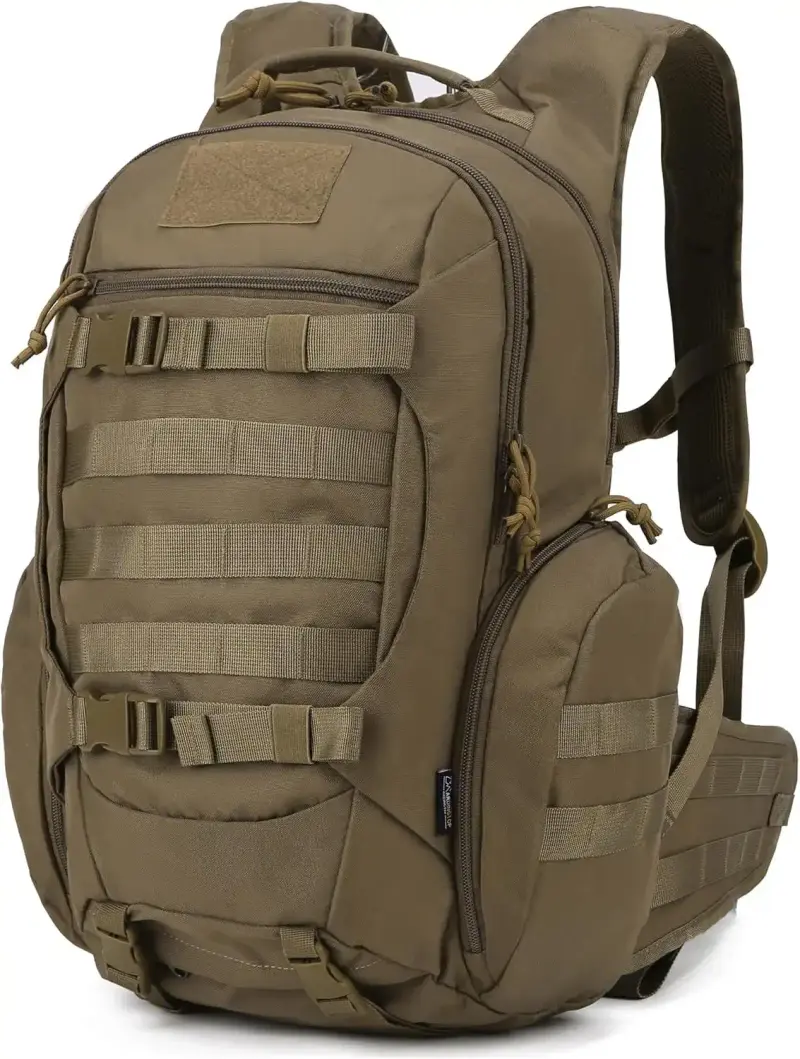
Mardingtop 35L Tactical Military MOLLE Backpack
35L with a full MOLLE system. Ideal size for an individual 72h kit without going over the weight limit
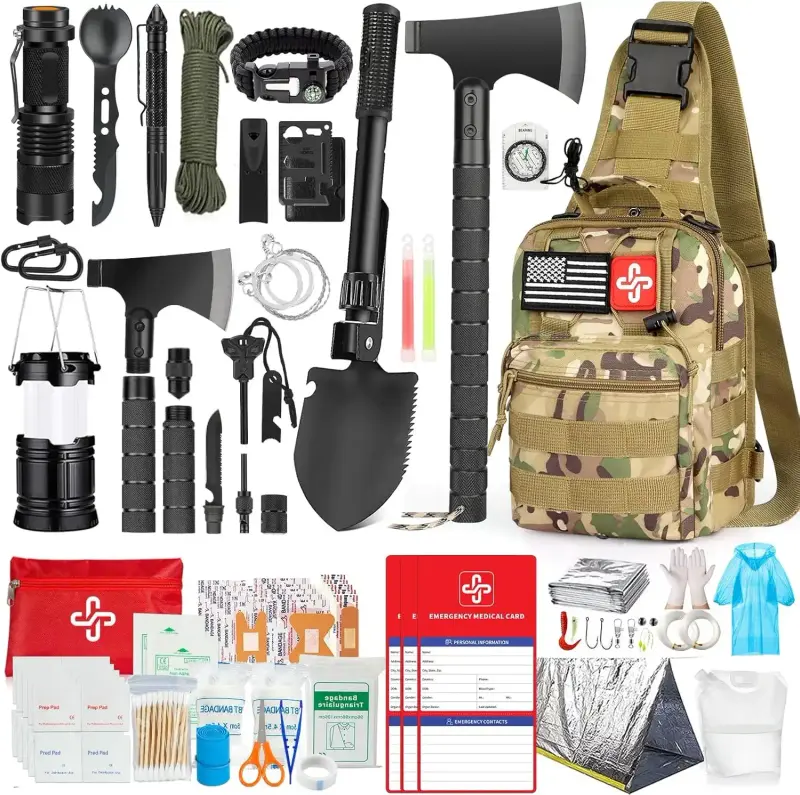
Survival Kit 262 Pieces Complete
262 pieces including a first aid kit, tent, axe and shovel. For anyone who prefers a closed, ready kit with nothing to assemble
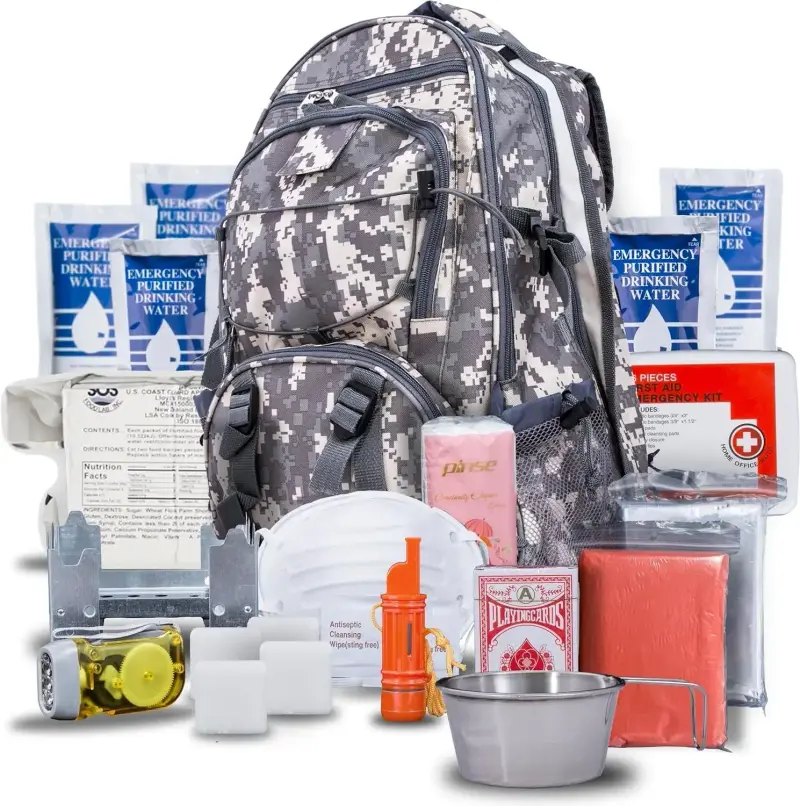
Blue Seventy-Two Pro Series Camo Deluxe 72 Hour Kit
Professional 72h kit with purification tablets, food, first aid and signalling. All assembled and ready
How to Organise the Backpack
Fifteen seconds to pull out the flashlight in the dark. If you have to empty the backpack to find it, the order is wrong.
What works:
Bottom layer: clothing, blanket, solid food. The things you don’t need urgently. Middle layer: water, first aid kit, tools. The things you need within minutes. Outer pockets and the top: flashlight, documents, cash, tablets, power bank. The things you need within seconds.
Heavy items go close to your back. Sealed bags inside the backpack for electronics and documents. A backpack with no rain cover can soak through in 15 minutes of real rain.
If you want the process in more detail, you’ll find the full guide in how to prepare your 72-hour survival bag.
The Mistakes That Come Up Most Often
Overpacking. The most common mistake. People pack “just in case” and end up with 25 kilos. The two-kilometer test doesn’t lie.
Forgetting chronic medication. One of the items most often forgotten in real evacuations. A list taped to the backpack helps: when you head out, one last check — “medication: yes or no?”.
Having no cash. When the network goes down, the card is useless. ATMs are among the first to collapse.
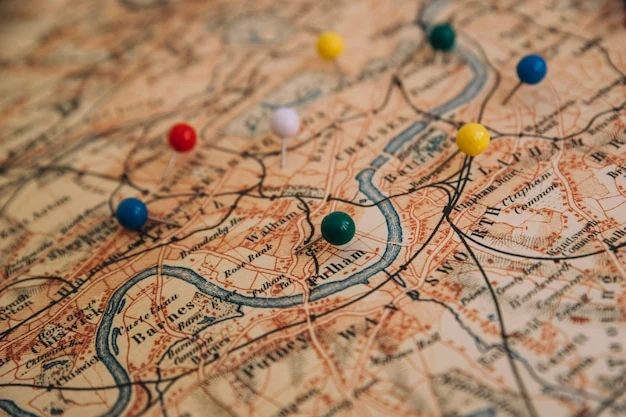
Trusting only your phone for maps. A smartphone under heavy use (GPS, calls, 4G) lasts about six hours. Carry a physical map of your area.
Not checking the backpack every six months. Bottled water expires. So do the tablets. Lighters empty out. The power bank self-discharges on its own. Put a six-monthly review in the calendar and you’re done.
A brightly colored backpack. In tense situations, blending in has real value. Dark or neutral colors.
The Same Backpack Works for Ten Different Situations
The backpack built for an armed conflict is exactly the same one you need for a flood, a wildfire, an extreme snowstorm or an earthquake. There aren’t two different lists. It’s the same one.
In most of Europe, the odds of having to evacuate for a natural disaster are considerably higher than ending up in the middle of an armed conflict. Those evacuated from Valencia in October 2024 had five minutes in many cases. Those fleeing wildfires, less.
Preparing for the extreme leaves you ready for the likely.
To complement the backpack with a family action plan, see how to make a family evacuation plan step by step.
About this article: We regularly review the recommendations of national Civil Protection agencies, the European Commission and international emergency bodies. Last reviewed: March 2026. In a real emergency, always follow the instructions of your local emergency number and Civil Protection. This site takes part in the Amazon EU Associates Programme: when you buy through our links, we receive a small commission at no extra cost to you.
Prices are indicative and may vary on Amazon.
Looking for products mentioned in this article?
Products reviewed by our team on Amazon, all rated 4+ stars.
Build your plan for Conflict
Exact quantities, verified products, and a personalized shopping list for Conflict. Free in 5 minutes.
Plan for ConflictUS emergency preparedness editorial team
The EmergencyKitLab editorial team turns US emergency guidance into practical plans for hurricanes, tornadoes, wildfires, winter storms, earthquakes and extended outages. We focus on affordable household readiness, region-specific risks and products that perform under real conditions.
Frequently Asked Questions
What should a war evacuation backpack contain?
How much should an evacuation backpack weigh?
How is a war backpack different from a home kit?
What documents should I keep in the emergency backpack?
How often should I check the emergency backpack?
Related Articles
72-Hour Survival Bag: Complete Checklist Organized by Weight
What to pack in your 72-hour survival bag and how to organize it so you can find everything in the dark. Full checklist with real weights and priority order.
9 min read7 Emergency Radios Tested: Only 2 Survive 48h Without
7 emergency radios tested in 2026: only 2 last 48h without recharging. After Hurricane Helene, we compared real battery life starting at $25.
12 min readBest 72-Hour Survival Backpack 2026: $45 Beats $150
EmergencyKitLab 2026 test: 5 survival backpacks compared. The $45 pick outlasts $150 models, holds 26 lbs — and the one you should skip.
12 min read