Emergency Kit for Civil Conflict: Preparedness Guide 2026
Build your plan for Conflict
Free, no sign-up, takes 5 minutes.
FEMA has recommended for years that every American household maintain an emergency kit with 72-hour self-sufficiency. Three days. Without help from anyone. And this is not advice from some fringe survivalist channel — it is the official recommendation of the federal government’s emergency management agency, printed on Ready.gov and distributed through every local emergency management office in the country.
In 2025, the European Commission issued a similar directive asking all 27 member states’ citizens to prepare what they called a “resilience bag.” The growing international emphasis on individual preparedness reflects what emergency professionals have known for decades: when systems fail, the first 72 hours are on you.
What you will find here is everything you need to build an emergency kit adapted for civil conflict scenarios: what the standard resilience bag includes, what extra elements you need if civil unrest or prolonged disruption is your concern, and how to ground all of it in your household. No dramatics.
Why Preparedness Agencies Are Urging Civilian Readiness
The FEMA Ready.gov kit recommendation is the baseline: enough water, food, and supplies for your household to survive 72 hours independently. Why 72 hours? Because that is the time frame emergency services typically need to coordinate a response and begin distributing aid. Until those wheels turn, you are on your own.
But not all countries take the same approach. Sweden distributed its “If Crisis or War Comes” booklet to 4.8 million households in 2018. Their recommendation is not 3 days — it is 7. Finland has maintained a civil defense culture since the Cold War that includes shelters for 80% of its population. The EU directive from 2025 is directly inspired by those Nordic models.
Our process for verifying this information: we analyzed FEMA’s official guidance, consulted Red Cross disaster preparedness materials, reviewed published experiences from citizens in countries with recent conflicts, and cross-referenced with opinions from experienced preppers who have been sharing practical knowledge for years. When we cite an operational figure (like the real battery life of a radio or the reliability of a dry bag), it is because we verified it against multiple sources, not because a product listing said so.
The United States has FEMA and a robust emergency management system, but like most Western nations, individual household preparedness varies enormously. The Department of Homeland Security identifies threats including attacks on critical infrastructure and supply chain disruptions as significant risks. But there is no step-by-step civilian guide comparable to Sweden’s or Finland’s. If you want to be prepared, you need to build the plan yourself. That is why you are reading this.
If you are interested in the broader context of infrastructure resilience, we cover it in our power grid failure preparation guide.
What Goes in the Standard Resilience Kit
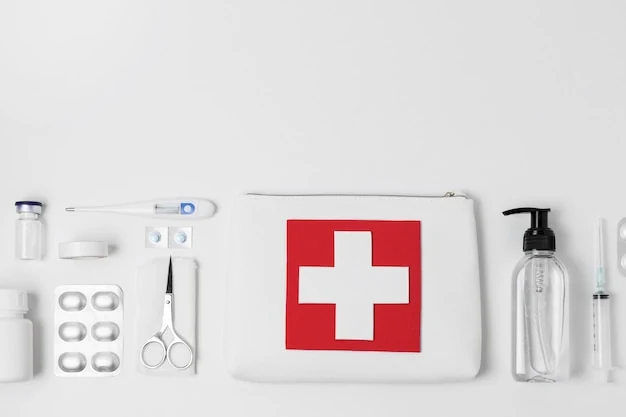
The FEMA recommendation, complemented by Red Cross guidance, covers these categories:
- Drinking water — minimum 1 gallon per person per day for 72 hours. Do the math for your family. For a family of 4 that is 12 gallons. Twelve. That is basically three 5-gallon containers.
- Non-perishable food for 3 days that does not require cooking or refrigeration (Datrex 3600 calorie bars are compact and last 5+ years)
- First aid kit with the family’s regular medications (a complete first aid kit like the Johnson & Johnson covers the essentials)
- Flashlight and spare batteries or rechargeable
- Emergency radio with batteries or hand crank
- Personal documentation — driver’s license, passport, insurance policies
- Cash in small bills
- Emergency whistle and mylar blanket (Red Cross specific recommendation)
For detailed calculations of water, food, and budgets based on your family size, check our 72-hour emergency kit guide. Real numbers there, not the generic figures every website copies from each other.
Now, a kit designed for a civil conflict scenario needs considerably more than that. And this is where 8 out of 10 people searching for “emergency kit civil conflict” get lost, because most guides copy the FEMA list and call it a day. No. There is more.
What a Civil Conflict Kit Adds to the Standard Kit
Extended Documentation and Digital Backup
In a standard kit, they tell you to pack your driver’s license. Period. In a civil conflict kit, documentation becomes the top priority. Why? Because if you need to leave the area or cross state lines, you need robust identification. Families displaced by Hurricane Katrina spent weeks proving their identity, property ownership, and medical history. Weeks.
What you should have prepared:
- Up-to-date passports for the entire family (not just driver’s licenses)
- Copies of deeds, property titles, insurance policies, complete medical records
- An encrypted USB drive with scans of all documents
- Everything inside a waterproof document bag
About waterproof bags. They cost $8-15 on Amazon in packs of 2-4. Look for double-zip closure. Why double? It creates two independent seal barriers; if one fails from wear, the other holds. Cheap ones under $5 sometimes leak moisture through the corners where the heat-seal was not complete. Seems like a minor detail until you open the bag and find damp documents.
One detail that almost never appears in lists, which we discovered checking stored materials during summer: if you store them in a garage where temperatures exceed 95 degrees, the plastic sticks to paper documents. Put each document in a thin plastic sleeve before storing them in the waterproof bag. Costs $2 for a pack of sleeves and saves you the moment of peeling a passport off plastic exactly when you need it most.
Diversified Cash
US currency in fives, tens, and twenties. This is key. It has been proven in every recent power outage: card readers stop working. Stores that manage to open only accept cash, and many do not have change for large bills.
But if what concerns you is a conflict scenario, recent historical experience suggests going one step further. During the conflicts in Yugoslavia in the 1990s and Ukraine since 2022, international currencies held their value when local currency collapsed. Having a small amount in a widely accepted foreign currency is not bunker paranoia. It is what people who have lived through these scenarios recommend consistently. How much? $200-300 stored at home gives you a reasonable cushion.
Physical Maps and Displacement Routes
GPS depends on satellites that can be targeted. Google Maps depends on internet. What do you do if Google Maps will not load? If you have no cell service? If you have been on the road for two hours and do not know if the highway exit takes you toward the border or deeper inland?
A printed road map of your state costs $5 and takes up less space than a paperback. Mark the main routes and alternatives toward a safe destination you have defined with your family.
The Displacement Plan: What Almost Nobody Prepares
Here is the big difference between preparing for a natural disaster and preparing for a civil conflict. In a hurricane or blizzard, the standard move is to stay home and ride it out. In a civil conflict, you may need to leave. And evacuation is not something you do calmly with time to think.
The experiences from Ukraine are the closest reference point. The first 6-12 hours after a displacement order are the ones that matter. After that, gridlock traps thousands on congested highways. Those who left early, left. Those who waited “to see what happens” got stuck. That blunt.
The Family Plan
- Meeting point if the family is separated when it happens (and a second alternate if the first is inaccessible)
- Primary and alternate routes marked on the physical map, not just in the phone
- Safe destination outside the affected area: a relative, a friend, whatever you have
- Keep the gas tank at least half full at all times (this costs zero dollars and people do not do it)
- Out-of-area emergency contact to centralize family communication
For a complete evacuation planning framework, see our family evacuation plan guide.
Communication When the Grid Goes Down
FRS walkie-talkies (Family Radio Service, no license needed) give you family-range communication when cell networks are down. Range claims of 20+ miles are marketing — realistic range is 1-3 miles in urban areas, more in open terrain. But for coordinating a family evacuation from different starting points to a meeting location, they are invaluable.
A hand-crank emergency radio with AM/FM reception is your connection to official information when everything else is down. The Midland ER310 handles NOAA weather alerts plus standard AM/FM, charges via hand crank, solar, or USB, and has a flashlight built in.
What the manufacturer does not tell you: the internal battery loses 30-50% capacity after 12 months without charging. Put it on your 6-month review calendar.
Clothing and Appearance
This is counterintuitive for many people drawn to tactical and military-style gear. In a civil conflict scenario, blending in is significantly more important than looking prepared. Neutral-colored, durable civilian clothing. Nothing camo, nothing that screams “I am carrying supplies.” A gray hiking backpack attracts far less attention than a camo MOLLE pack covered in pouches.
Sturdy closed-toe shoes. Spare socks. A rain jacket. Practical and unremarkable.
What Experienced Preppers Focus On
After years of reading forums, cross-referencing firsthand accounts, and testing gear ourselves, the pattern is consistent. The people who have actually been through crises focus on three things:
-
Water purification, not just water storage. A Sawyer Squeeze filter weighs 3 ounces and gives you the ability to make drinkable water from any freshwater source. Combined with purification tablets as backup, you have indefinite water security as long as you can find a water source.
-
Physical fitness. No piece of gear compensates for being unable to walk 3 miles with a 25-pound pack. This does not mean you need to run marathons. It means: can you carry your kit for 30 minutes without stopping? If not, the kit is useless or you need to train.
-
Community connections. Lone wolves do not survive crises. Knowing your neighbors, having mutual aid agreements, and being part of a community means resources, information, and help when you need it. This is the least-discussed and most critical element of preparedness.
“The biggest mistake in home preparedness is thinking you are ready because you bought a kit. Without practice, without a plan, and without knowing how to use the gear, the kit is not worth much.” — Emergency management instructors, during community preparedness training
Building an emergency kit for civil conflict is not about predicting doomsday scenarios. It is about acknowledging that systems fail — power grids, supply chains, communication networks, social order — and having a basic plan for the gap between failure and recovery. That gap is where preparation matters.
Start with the standard FEMA 72-hour kit. Then add the documentation, the physical maps, the cash reserve, and the family displacement plan. Test it. Practice it. Review it every 6 months. That is it.
If you want to understand the bigger picture of emergency preparedness, our ultimate guide covers everything from water storage to communication planning.
In real emergencies, always follow the instructions of FEMA, the Red Cross, and official emergency services (call 911). The information in this article is guidance for preventive preparation and does not replace the advice of emergency professionals, doctors, or authorities.
This article contains affiliate links. If you buy through them, we receive a small commission at no additional cost to you. That is how we keep EmergencyKitLab running.
Prices are indicative and may vary on Amazon.
Looking for products mentioned in this article?
Products reviewed by our team on Amazon, all rated 4+ stars.
Build your plan for Conflict
Exact quantities, verified products, and a personalized shopping list for Conflict. Free in 5 minutes.
Plan for ConflictUS emergency preparedness editorial team
The EmergencyKitLab editorial team turns US emergency guidance into practical plans for hurricanes, tornadoes, wildfires, winter storms, earthquakes and extended outages. We focus on affordable household readiness, region-specific risks and products that perform under real conditions.
Frequently Asked Questions
What is a resilience bag and why does FEMA recommend one?
Why 72 hours of self-sufficiency and not more?
Does the US have an official civilian preparedness guide for conflicts?
What should I add to a basic kit if civil conflict is a concern?
Related Articles
72-Hour Emergency Kit 2026: Checklist + Budget (Family)
EmergencyKitLab 2026 guide: complete 72-hour kit checklist from $50/person. Winter Storm Uri-tested tips + the #1 water mistake families still make.
15 min readEmergency Preparedness: The Ultimate Guide for US Families
Complete emergency preparedness guide for American families. FEMA-based checklists, real budgets, and the mistakes most people make.
18 min readHow to Prepare for a Power Grid Failure (Lessons from
Complete power outage preparation guide. Lessons from the 2021 Texas grid collapse, gear recommendations, and a step-by-step readiness plan.
12 min read