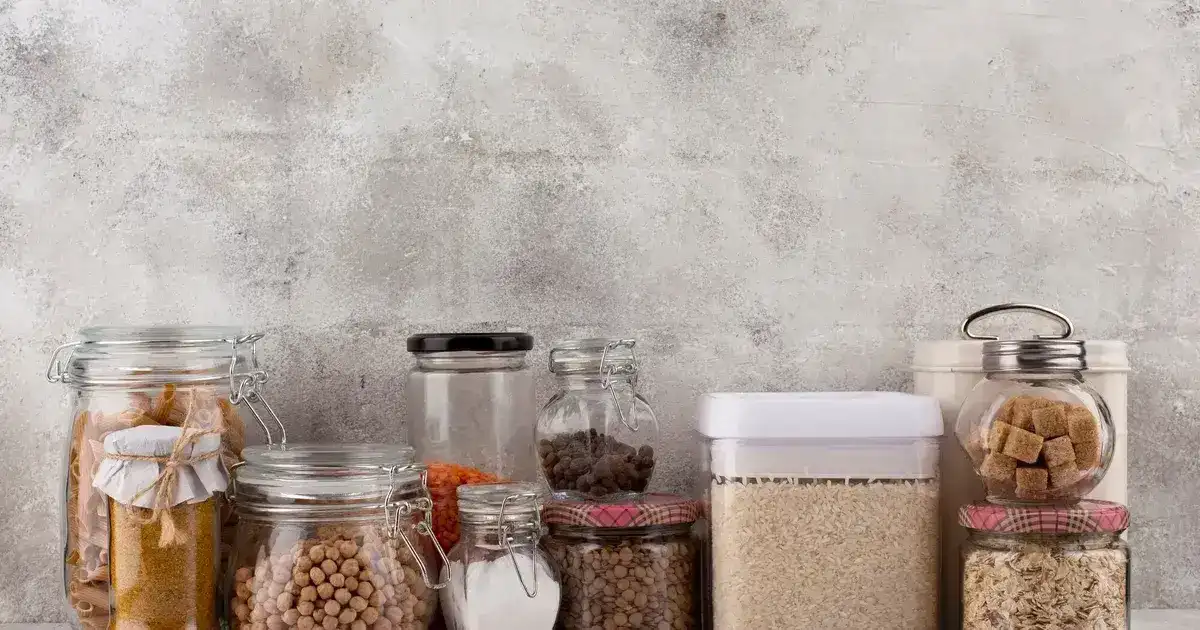
Supply Shortage: 14-Day Stockpile for Under $100
Build your personal emergency plan
Free, no sign-up, takes 5 minutes.
February 2021: the Texas freeze knocks out power for 4.5 million homes and grocery shelves empty within 48 hours. Hurricane Ian, September 2022, leaves southwest Florida without supplies for over a week. Supply chain disruptions during 2020-2021 create rolling shortages of everything from toilet paper to canned goods. Hurricane Helene, 2024, cuts off entire communities in western North Carolina for weeks. And every severe winter storm reminds us that the supply chain is one bad weather event away from breaking down.
Five scenarios. Five supply disruptions in five years, with zero advance warning for any of them. People who had nothing prepared relied on outside help that took days — sometimes weeks — to arrive. Look, I am not going to launch into speeches about the end of the world or anything like that. Let us get to the point: what to buy, how much you need based on the people living in your home, and how to maintain the stockpile without everything expiring in the back of a closet.
Why 14 Days and Not Just 72 Hours
FEMA recommends 72 hours of self-sufficiency as a minimum. That is fine as a starting point, but reality has blown past that minimum again and again.
After the Texas freeze, supplies took over 5 days to normalize. Hurricane Ian left communities without normal supply lines for over a week. After Helene, some areas in Appalachia went 3 weeks without normal access to groceries. And after any major grid failure, even if power comes back in hours, stores take days to restock because the cold chain breaks and refrigerated products are lost.
There is a pattern. We have cross-referenced FEMA after-action reports and Red Cross data, plus dozens of firsthand accounts from forums, and it is always the same: people overestimate what they have in the pantry and underestimate how fast basic products disappear. Look at the Texas freeze: families with a “full pantry” discovered on day three that what they had was snacks, drinks, and food that needed electricity to cook. Which they did not have.
Is 14 days excessive? More excessive than running out of tap water on a Tuesday at 3 PM and not knowing when it comes back? Or going to the grocery store and finding empty shelves? The Red Cross already openly acknowledges it: the minimum 3-day supply should be extended to 2 weeks.
The numbers. One gallon of water per person per day, split between drinking, cooking, and minimal hygiene. About 2,000 kilocalories daily. For one person, 14 gallons of water and roughly 20 pounds of varied food. It fits on a shelf and under the bed. No basement required. If you want to calculate the exact quantities for your family, use our emergency planner.
For this article we cross-referenced manufacturer specifications with real opinions from prepper forums, Red Cross and FEMA manuals, and what we found ourselves when opening kits stored for months.
What to Buy Before a Supply Shortage: Category List with Real Quantities
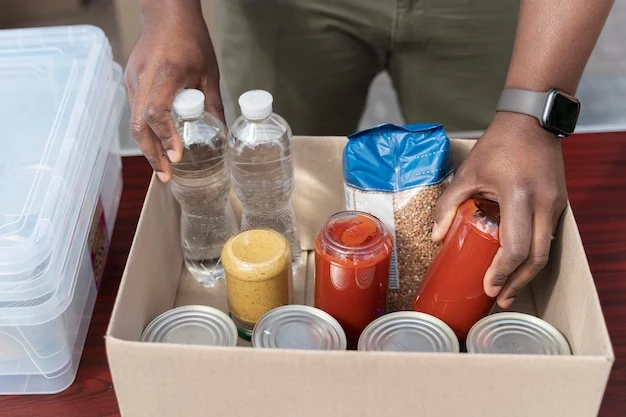
What should you buy before a supply shortage in the US? The essentials for 14 days per person: 14 gallons of water in HDPE containers, 4 lbs of rice, 4 lbs of pasta, canned beans and legumes, canned fish (tuna, sardines), 2 liters of cooking oil, unscented bleach, basic medications, batteries, LED flashlight, a camping stove with 5-7 butane cartridges, and $200-300 in cash.
Most lists say “buy rice and canned goods” but stop there. They do not tell you how much for how many people or for how many days. This one does.
Water: The Mistake Everyone Makes Is Not Calculating the Volume
One gallon per person per day. For 14 days, one person needs 14 gallons — two 7-gallon jugs or three 5-gallon containers. A family of 4 needs 56 gallons.
Yes, 56 gallons sounds intimidating when you live in a 700-square-foot apartment. But it is more manageable than it seems. HDPE containers from hardware stores and camping supply shops run $10-15 for 5-7 gallons. They are considerably more durable than grocery store gallon jugs, take up less proportional space, and do not transfer flavor to the water as quickly as thin PET plastic. Two under the bed, two more in the back of the closet. Done.
What about regular gallon jugs? Water in PET jugs starts picking up a plastic taste after 6-12 months, especially in heat. Heat and UV light accelerate the migration of compounds from the container to the water — basic chemistry. We have had PET jugs stored for 12 months in a kitchen cabinet with temperatures ranging from 64 to 86 degrees depending on the season: the water was still safe, but the taste was unpleasant enough that nobody wanted to drink it straight. HDPE containers, under the same conditions, kept the water tasting acceptable even after 14 months. Rotate PET every 6 months; HDPE lasts longer.
As a complement, purification tablets like Aquatabs ($8-12 on Amazon) are cheap insurance in case tap water comes out contaminated after a flood or hurricane. One tablet per liter, 30 minutes wait time. With cold water, double the time because the chlorine reaction kinetics slow down below 50 degrees Fahrenheit. But note: they do not remove chemical contamination. Pesticides, heavy metals, industrial residue. For that you need an activated carbon filter or a reverse osmosis system. Tablets kill microorganisms and that is it.
For a deeper dive on methods and containers, our guide on water filters versus purification tablets covers the details.
Pantry Foods: What Actually Lasts and What Does Not
Let us talk about food. And this is key: it is not about buying a bunch of stuff and shoving it in a cabinet. It is about knowing what actually lasts, what quantities you need, and what goes bad sooner than you think.
- White rice: 2 lbs per person per week. The manufacturer says 2 years, but it actually lasts 5 years or more in a sealed container in a cool place. Why so long? Because it has very little residual moisture and virtually zero lipids, the two things that cause food degradation. In heat and humidity, weevils can appear after 6 months. If they do, the rice is still edible after boiling, but better to prevent it: store in an airtight container with a bay leaf as a natural repellent.
- Dry pasta: labeled 1-2 years; actually 3 years or more in a dry location.
- Canned beans and legumes: already cooked, can be eaten cold if necessary. Dried beans harden after 12-18 months and need double the cooking time, using double the fuel. Critical when you are cooking with limited butane cartridges.
- Canned tuna, sardines, salmon: manufacturer says 2-5 years. Safe well beyond that if the can is intact, according to the USDA. But caution: temperatures above 86 degrees reduce shelf life by up to 50%. And discard any swollen or leaking can without hesitation. A swollen can may indicate Clostridium botulinum activity. Not something to experiment with.
- Cooking oil: 12-18 months in darkness. Once opened, 2-3 months. Air contact degrades the polyphenols and unsaturated fatty acids, which is why it is packaged in dark bottles.
- UHT milk, crackers, trail mix, salt, sugar. And honey, which essentially does not expire: its low water content and acidic pH prevent microbial growth.
Hygiene, Medications, Cooking, and What Nobody Includes in the Lists
Bar soap (takes up little space, lasts a long time), toilet paper (one roll per person per week), feminine hygiene products or diapers if applicable, and unscented bleach. That basic bleach also works to purify water: 2 drops of concentrated bleach per liter of clear water, shake and wait 30 minutes (source: WHO). The sodium hypochlorite destroys bacterial and viral cell membranes through oxidation, but needs those 30 minutes of contact time to complete the process. It must be plain bleach WITHOUT perfume, WITHOUT detergent, WITHOUT anything extra: just sodium hypochlorite and water. Not the pine-scented kind. Trust me, I once bought the wrong one by mistake and when I went to use it for water purification I realized I had just poured something undrinkable into the water. A silly mistake avoided by reading the label for 5 seconds.
For medications, the basics: acetaminophen (shelf life 3-5 years unopened), ibuprofen (3 years), oral rehydration salts (2 years), antiseptic, and bandages. If you take chronic medication, talk to your doctor about having 2-4 extra weeks of supply. Some medications like insulin need refrigeration between 36 and 46 degrees Fahrenheit while unopened. Once in use, they can be kept at room temperature below 86 degrees for a maximum of 28 days according to most manufacturers. Above 86 degrees? Insulin loses effectiveness rapidly because heat degrades the protein molecules. If you depend on insulin and anticipate a power outage, you need an active cooling solution: portable cooler with gel packs or ice. Always consult your doctor about storage conditions for your medication.
The emergency first aid kit does not replace professional medical care. For prescription medications, consult your doctor before including them in the kit. Medication expiration dates are critical. Check them and renew the kit at least once a year.
Brand-name AA and AAA batteries (shelf life 5-10 years; store brand batteries deliver 30-40% less and acid leaks are considerably more frequent), LED flashlight, candles with lighter, and a charged power bank. A 10,000 mAh power bank gives 2-3 real smartphone charges, not the 4-5 the manufacturer puts on the box. The internal circuit conversion losses eat 20-30% of the nominal capacity. And it loses 5-10% charge per month sitting in a drawer, so recharge it every 3 months or you will find it dead exactly when you need it most.
And the camping stove. That $20 camping stove should be mandatory in every American household. I mean it. A butane camping stove with standard cartridges. One cartridge lasts 2-3 days cooking 2 meals per day for 4 people. For 14 days, 5-7 cartridges. Each cartridge runs $3-5.
During Winter Storm Uri, households with gas stoves could keep cooking normally. The millions of households with electric ranges or induction cooktops had no way to heat even a cup of milk. A $20 camping stove. Twenty bucks. That was the difference between eating hot food or opening a cold can that day.
But this is very important: butane stoves produce carbon monoxide (CO), an odorless and invisible gas. Use the stove ALWAYS with cross-ventilation or on the porch/balcony. Never in a closed space. Carbon monoxide poisoning symptoms are headache, dizziness, nausea, and drowsiness. If you notice them, get outside immediately and call 911. It sounds excessive until you read the cases that repeat every winter.
And cash. $200-300 in tens and twenties, split across 2-3 places in the house. Why not fifties? Because during the Texas freeze, the stores that opened only accepted cash and had no change for anything large.
For a go-bag ready to leave in 15 minutes, our 72-hour emergency kit guide covers that part.
What Disappears First from the Store: The Pattern That Keeps Repeating
We have documented this across five shortage events since 2020, cross-referencing media reports, forum testimonials, and data from retail associations:
- First 6-12 hours: bottled water. Always. Always first.
- First 24 hours: toilet paper, bleach, hand sanitizer.
- 24-48 hours: bread, milk, flour, yeast.
- 48-72 hours: canned goods, rice, pasta, cooking oil.
- After 72 hours: fresh fruit, vegetables, and refrigerated products. By this point, there probably is not much of anything left.
When you already see lines at the grocery store, the buying window has closed. During the 2020 supply chain disruptions, fresh produce and milk shelves emptied in 2 days. Shelf-stable products held out 4-5 days before running out. If you have the stockpile built ahead of time, you do not have to compete with anyone for the last gallon of water at 7 AM.
Real Shelf Life: What the Manufacturer Does Not Tell You
The shelf life question. Because one thing is what the label says and another is what actually happens when you leave things stored for months in a kitchen cabinet where summer temperatures easily exceed 82 degrees.
We have had products stored for over a year under normal household conditions — kitchen cabinet, pantry shelf, whatever temperature the season brought. What survived well? Rice in airtight containers, canned goods with intact seals, sealed purification tablets. What failed? Batteries. Look, this one still stings a little: store-brand alkaline batteries with acid leaks that ruined the flashlight. The good flashlight, of course, not the $8 backup from the dollar store. Murphy’s Law applied to emergency preparedness. Also the bleach, which had lost half its chlorine concentration. And a power bank showing 15% charge after 10 months untouched.
Brand-name alkaline batteries maintain charge for 5-10 years. But store them outside the device: left in, they drain on their own and if a battery leaks acid inside the flashlight, that flashlight is dead. Check them at every quarterly review, takes 30 seconds and saves you a nasty surprise.
Bleach loses its effectiveness as a disinfectant after 12 months. What happens is the sodium hypochlorite gradually decomposes into common salt and oxygen, and the process accelerates with heat and light. If you are storing it for water purification, rotate it yearly and keep it somewhere cool and dark.
Dented cans without leaks are safe; swollen cans go in the trash without hesitation. The USDA is clear: a swollen can may indicate gas production by Clostridium botulinum, whose toxin is one of the most dangerous substances that exist. Do not gamble with this.
One thing 8 out of 10 people building their first stockpile overlook: hand-crank emergency radios with solar panel ($20-40 on Amazon) were the only reliable source of information during prolonged power outages, when cell towers exhausted their backup batteries in 4-8 hours. But what the manufacturer does not tell you in the nice Amazon listing is that the solar panel takes 8-12 hours of direct sun to charge, not the 4-6 indicated. Overcast? Practically useless. The reason: the miniature panels integrated in these radios have a real power output of 0.5 to 1 watt, insufficient to charge a 2,000-4,000 mAh battery in a reasonable time. The hand crank is the real power source. One minute gives 3-5 minutes of radio on quality models. And surprise: the internal battery loses 30-50% of capacity after 12 months without charging. Recharge it every 3-4 months.
How to Maintain the Stockpile Without It Expiring: The FIFO Method
FIFO: first in, first out. Basically the same system grocery stores use, and it works the same in your pantry:
- New stuff in back, old stuff in front. Always consume the oldest first. Sounds obvious, but as I mentioned earlier with the “full pantry” problem, almost nobody actually does it.
- Gradual buying. Add $10-15 extra per week to your regular grocery run. In 2 months you will have a complete 14-day stockpile. No panic buying, no clearing an entire shelf on a Saturday.
- Review every 3 months: expiration dates, power bank, medications, batteries. Put it on your phone calendar. It is literally 10 minutes that can save you from discovering your flashlight has acid-leaking batteries the night the power goes out.
- Integrate it into your daily consumption. Consume and replace. No boxes forgotten in the attic that you open two years later afraid of what you will find.
Apartment living? For storage in small spaces: under beds, top shelves of closets, stackable bins in a storage area if you have one, or even behind the couch. Fourteen days of supplies for 2 people fit on a 32-inch shelf unit. No drama.
At the end of the day, whoever applies FIFO does not have expiration problems. Whoever just accumulates opens the box two years later and finds expired cans, plastic-tasting water, and acid-leaking batteries. The difference is those 10 minutes every 3 months.
Common Mistakes (Some Will Sound Familiar)
- Buying food but zero water. Without water you cannot cook anything you bought. And it is not just for cooking: you need water for drinking, for minimal hygiene, for medications that need to be dissolved. Water always comes first. Always.
- No way to cook without electricity. The electric range and induction cooktop are useless without power. The $20 camping stove thing, which I already said but am repeating because I think it is really important.
- Forgetting cash. Card readers do not work without electricity and ATMs do not either. In every blackout the same scene repeats: people with wallets full of cards and unable to buy a bottle of water.
- Buying 40 pounds of one thing. Fourteen days eating only rice is not viable, neither for your body nor your morale, which in a stressful situation is already at rock bottom. You need variety: protein from canned fish and beans, carbs from rice and pasta, fats from oil and trail mix.
Look, no stockpile covers every possible shortage scenario. Be clear about that. But 14 days of basic supplies (water, food that does not need electricity to prepare, a camping stove, batteries, cash, and a decent first aid kit) puts you in a much better position than the vast majority of American households. Start this week: add $15 to your next grocery run. In two months you will have it set up.
Is it worth it? Ask anyone who went through Winter Storm Uri or Hurricane Helene whether they would have preferred to have the pantry ready.
If you want to understand the full picture, our guide on emergency preparedness covers the broader context.
In real emergencies, always follow the instructions of FEMA, the Red Cross, and official emergency services (call 911). The information in this blog is guidance for preventive preparation and does not replace the advice of emergency professionals, doctors, or authorities.
Prices shown are approximate and may vary. Check the current price on Amazon before purchasing. EmergencyKitLab is a participant in the Amazon Associates Program: when you buy through our links, we receive a small commission at no additional cost to you.
Prices are indicative and may vary on Amazon.
Looking for products mentioned in this article?
Products reviewed by our team on Amazon, all rated 4+ stars.
US emergency preparedness editorial team
The EmergencyKitLab editorial team turns US emergency guidance into practical plans for hurricanes, tornadoes, wildfires, winter storms, earthquakes and extended outages. We focus on affordable household readiness, region-specific risks and products that perform under real conditions.
Frequently Asked Questions
How many days of supplies should I stockpile for a shortage?
How much water do I need to store per person for 14 days?
How do I prevent my emergency food stockpile from expiring?
How much cash should I keep at home for an emergency?
Can I store a 14-day supply in a small apartment?
Related Articles
72-Hour Emergency Kit 2026: Checklist + Budget (Family)
EmergencyKitLab 2026 guide: complete 72-hour kit checklist from $50/person. Winter Storm Uri-tested tips + the #1 water mistake families still make.
15 min readEmergency Preparedness: The Ultimate Guide for US Families
Complete emergency preparedness guide for American families. FEMA-based checklists, real budgets, and the mistakes most people make.
18 min readHow to Prepare for a Power Grid Failure (Lessons from
Complete power outage preparation guide. Lessons from the 2021 Texas grid collapse, gear recommendations, and a step-by-step readiness plan.
12 min read