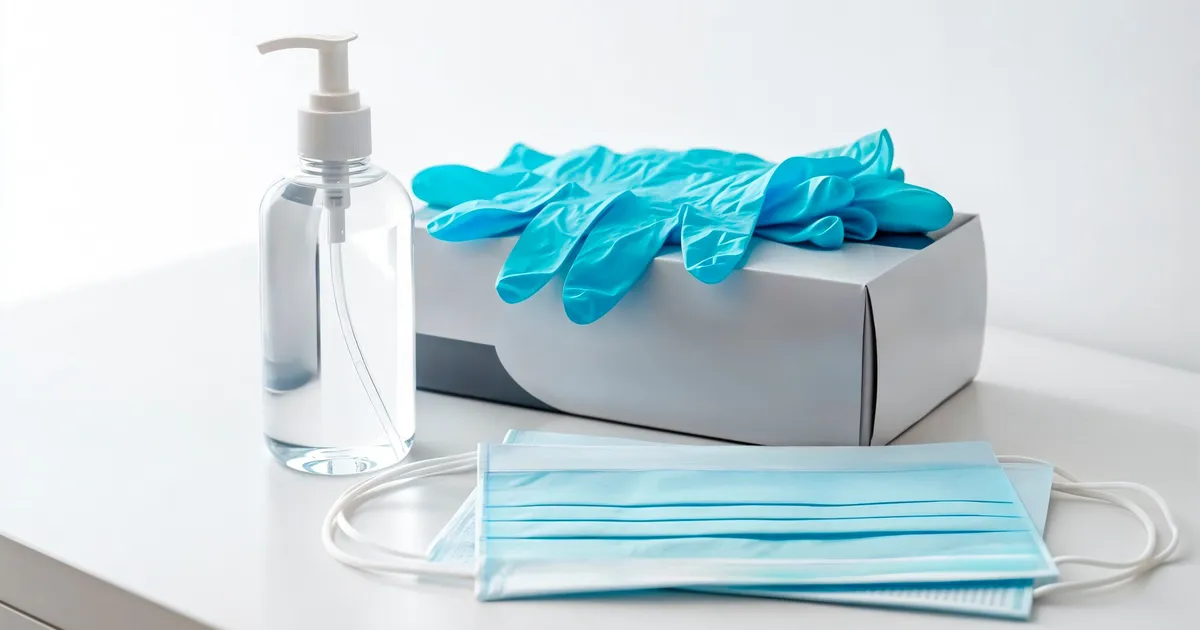
Personal Protective Equipment for Home Emergencies:
Build your personal emergency plan
Free, no sign-up, takes 5 minutes.
October 2024. Thousands of families in western North Carolina enter their own homes to remove mud after Hurricane Helene’s catastrophic flooding kills more than 230 people across six states, according to the National Weather Service and FEMA. The American Red Cross and local health departments asked anyone going to clean flooded homes to use N95 masks, nitrile gloves, and waterproof boots for that cleanup. Almost no one had them. At EmergencyKitLab we’ve spent years looking at which personal protective equipment for home emergencies actually holds up when you need to use it, and which stays in the drawer. This is what we’ve seen. No shortcuts.
A year before, the Maui wildfires of August 2023 killed at least 100 people and destroyed Lahaina. Survivors told us on forums they ran to pharmacies in Kahului and within hours there wasn’t an N95 box, nor filters, nor goggles, nothing. And during the recurring wildfire smoke episodes that hit California, Oregon, and Washington every summer, fine particles (PM2.5) shoot far above the EPA Air Quality Index “hazardous” threshold of 250.5 µg/m³ for hours or days, according to records from AirNow and data published by the California Air Resources Board.
Having household PPE is not being a doomsday prepper. It’s having stored what the public health authorities themselves ended up asking the population to use during these emergencies.
The essentials for a family: a box of 50 N95 or FFP2 masks (NIOSH 42 CFR 84 or EN 149), 10 N99 or FFP3 masks, a box of 100 nitrile gloves (not latex) per ASTM D6319 or EN 374-5, two pairs of sealed safety goggles (ANSI Z87.1+ or EN 166), and optionally two disposable Tyvek coveralls. Total: between $65 and $130.
When does a normal family need PPE? The real scenarios we live in the US
If you live in an urban apartment and don’t plan to climb Denali, the reasonable question is: does this apply to me? The short answer: if you’ve lived through any of the following scenarios without PPE on hand, you already know what it’s like to improvise with a bandana over your face.
Hurricane and post-flood cleanup
After Hurricane Helene in September-October 2024, Hurricane Ida 2021, and the recurring storm surge events along the Gulf and Atlantic coasts, the American Red Cross and state health departments asked those going to clean flooded homes to use N95 masks, thick nitrile gloves, and waterproof boots. The reason? It wasn’t the mud itself. It was the risk of leptospirosis (the bacteria from standing water), the molds that grow indoors after humidity, and the dust from dried mud with fine particles. Volunteers who entered homes in Asheville and Swannanoa in early November told us the worst moment wasn’t shoveling fresh mud, but seven or eight days later, when the mud had dried on the walls and scraping it with a putty knife raised a fine cloud that went down the throat. Those wearing a well-fitted N95 noticed it much less. If you have a home in a flood zone or know someone who does, read our article on hurricane home preparation before the next one arrives.
California and Oregon wildfire smoke
The Camp Fire of November 2018 (Paradise, CA) killed 85 people and displaced more than 50,000. The Bootleg Fire of July 2021 (Oregon) burned over 400,000 acres. The Maui wildfires of August 2023 destroyed Lahaina with at least 100 dead. The PM2.5 air quality network reported peaks well above 250 µg/m³ in nearby zones during the worst hours, several times above the EPA “hazardous” threshold. The CDC and California Department of Public Health asked for N95 minimum, N99 close to the front. If you live in a rural or peri-urban area near forest, having a wildfire preparation and evacuation kit ready stops being optional.
Tornado damage and post-storm cleanup
Tornado Alley extends from Texas through Oklahoma, Kansas, and into the Midwest, with peaks in spring and fall. After a tornado, debris cleanup involves splintered wood, broken glass, insulation fibers, and dust from drywall (sometimes containing asbestos in older homes pre-1980 per EPA). N95 mask, thick nitrile gloves, and sealed safety goggles are the minimum recommended by FEMA and the Red Cross. If you live in Tornado Alley, emergency preparedness ultimate guide covers the planning angle.
Winter storms and prolonged power outages
The Texas winter storm of February 2021 (Winter Storm Uri) killed at least 246 people, many from carbon monoxide poisoning from improvised heating. The Buffalo blizzard of December 2022 killed 47. During these events, the fridge full of spoiled food at room temperature becomes a household biosecurity problem. Nitrile gloves and N95 masks for handling waste are basic. If you live in the northern Plains, the Midwest, or the Northeast, lessons from a 5-day blackout covers the experience side.
Biological cleanups at home
No catastrophe needed. Crack, the lights go out for five days in a heatwave: the fridge full of spoiled food at 86°F becomes a household biosecurity problem. A garage with rodent presence (in the US, the CDC confirms 30-50 annual hantavirus cases, mostly in the Four Corners region, but the risk isn’t zero elsewhere). Caring for a sick family member at home. All of that is household PPE, no apocalyptic scenarios needed.
Why trust this guide
Last updated: 2026-05-09 · Author: Daniel Vega, editorial team at EmergencyKitLab
- Official sources: standards NIOSH 42 CFR 84, ASTM F1671, ANSI Z87.1+, EN 149/374-5/166/14126 via NIOSH/CDC, OSHA, ANSI, ASTM; American Red Cross, FEMA, EPA, AirNow, WHO 2021 guidelines.
- Technical documentation: bulletins from 3M, Honeywell, DuPont, and Ansell. We go to the technical PDF, not the box.
- Real use: preparedness forums, post-Helene 2024 threads, post-Maui 2023, Amazon US reviews, and volunteer reports.
- Editorial criteria: we prioritize safety, fit, and honesty over marketing. If a popular product has a flaw, we say so.
Affiliate disclosure: some links are Amazon affiliate links. If you buy through them, we receive a small commission at no cost to you. We only include products that meet the technical standards we detail.
The household PPE pyramid: what EmergencyKitLab considers essential and what’s optional
Look, this is the part no other English-language guide does well. Everyone gives you long lists. Nobody prioritizes. At EmergencyKitLab we divide household PPE into three levels by probability of real use, not by what sells best on Amazon. Which is different.
Level 1: essential for any home
- N95 or FFP2 masks (box of 50 units).
- Nitrile gloves (box of 100 units).
They cover 80% of real scenarios. Biological cleanups, light wildfire smoke from a nearby fire, handling spoiled food after a power outage, caring for a family member with flu or COVID. If you’ll only have one thing, have this. Approximate cost: $25-40.
Level 2: recommended if you live in a risk zone
- N99 or FFP3 masks (10 units).
- Sealed safety goggles ANSI Z87.1+ or EN 166 (2 pairs).
Necessary for dense wildfire smoke, concentrated volcanic ash, cleaning with full-strength bleach, or splashes of contaminated liquids. Add $30-50 over Level 1.
Level 3: optional depending on specific scenario
- DuPont Tyvek 500 coveralls (2 units).
- Dedicated waterproof boots.
- Airtight box with desiccant to store all PPE.
Only worth it if you have to clean a flooded basement, handle rodents in a shed, or enter a post-hurricane home. Add $30-50 more.
| Level | Main equipment | When to use it | Approx. cost |
|---|---|---|---|
| 1 (Essential) | 50 N95/FFP2 + 100 nitrile gloves | Cleanups, light smoke, flu at home | $25-40 |
| 2 (Recommended) | + 10 N99/FFP3 + 2 pairs goggles | Dense smoke, ash, concentrated bleach | $55-90 |
| 3 (Complete) | + 2 Tyvek 500 + airtight box | Flooded basement, rodents, post-hurricane | $95-130 |
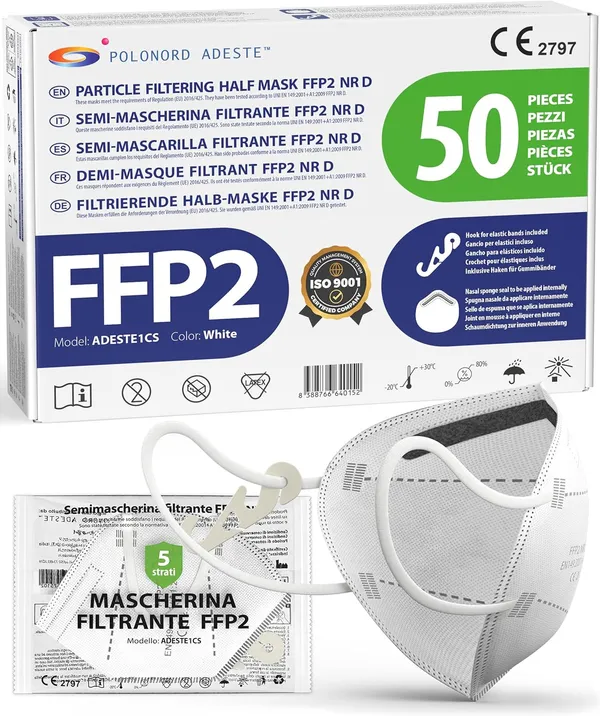
N95/FFP2-Equivalent Respirator Masks (50-Pack)
Respirator masks with CE marking (EN 149) at NIOSH N95-equivalent filtration level. Filter ≥94% of PM2.5 particles from wildfire smoke, volcanic ash, and dust after flooding. For a family of 4, a 50-pack covers 1-2 weeks of occasional use with 4-6 hour replacements during a serious wildfire smoke event in California or a hurricane evacuation cleanup on the Gulf Coast.
N95, N99, N100, FFP2, FFP3 masks explained with NIOSH 42 CFR 84 and EN 149
The US standard NIOSH 42 CFR 84 classifies particulate respirators in three letter classes (N, R, P) and three numeric levels (95, 99, 100). The European standard EN 149:2001+A1:2009 classifies filtering facepieces into FFP1, FFP2, FFP3.
The filtration numbers you do need to know
| Class (US) | EU equivalent | Min. filtration | Resists oils |
|---|---|---|---|
| N95 | FFP2 | ≥ 95% (NaCl) | No (N) |
| N99 | FFP3 | ≥ 99% (NaCl) | No (N) |
| N100 | (above FFP3) | ≥ 99.97% (NaCl) | No (N) |
| R95 | — | ≥ 95% | Resistant |
| P100 | — | ≥ 99.97% | Oil-Proof |
Numbers are measured against NaCl aerosols (sodium chloride) for N-class and DOP/oil for R/P. The European standard also tests against paraffin oil for FFP. And here’s the part almost nobody tells you: a poorly fitted N99 lets through more air than a well-sealed N95. I’m telling you. This is key.
NIOSH approval label: what to verify before buying
A legitimate N95 in the US market carries: “NIOSH” + manufacturer name + model number + lot number + TC approval number (TC-84A-XXXX). If those four elements aren’t on the mask itself or the box, bad sign. The CDC maintains the NIOSH Certified Equipment List (NPPTL) where you can verify any model. During 2020 and 2021, the FDA and CDC documented massive recalls of imported KN95s and counterfeit N95s. If the mask only says “respirator” without the NIOSH approval number, it’s not trustworthy. Period.
The European FFP2/FFP3 also work in the US
Yes. FFP2 (EN 149) has equivalent operational filtration to NIOSH N95, and FFP3 to N99. The CDC accepted European-marked FFP2/FFP3 during the 2020-2021 N95 shortage as authorized alternatives. If you have FFP2 from the pandemic, they still work for wildfire smoke in 2026. The fit test methodology is the same.
N95 vs KN95 vs surgical: which one to actually buy in the US
This is the most-searched question after a nearby wildfire or AQI red day. The short answer: for the US market, NIOSH-approved N95.
| Type | Standard | Filtration | Best for |
|---|---|---|---|
| N95 | NIOSH 42 CFR 84 (US) | ≥95% (NaCl) | Reliable household standard in the US |
| FFP2 | EN 149 (EU) | ≥94% (NaCl + paraffin) | Operational equivalent, accepted by CDC during shortages |
| KN95 | GB2626-2019 (China) | ≥95% (NaCl) | Documented risk of falsified compliance |
| Surgical | ASTM F2100 / EN 14683 | Limited bidirectional barrier | NOT PPE against smoke or ash |
Why a surgical mask doesn’t work for wildfire smoke
The surgical mask is designed to prevent the large droplets of medical staff from reaching the patient’s wound. It’s a barrier from outside in of the patient, not the wearer. Get it? It does not retain fine particles like the PM2.5 in wildfire smoke, the volatile compounds from benzene, or formaldehyde. The operational difference between an N95 and a surgical mask in an evacuation with dense smoke is the difference between coughing a couple of times the next day or ending up in respiratory ER.
The problem with the cheap KN95s you bought online
Look, I’ve been a NIOSH-N95 person forever. Imported KN95s… not even joking for a real emergency. During the pandemic, the FDA and CDC documented massive recalls of imported KN95s with falsified CE/NIOSH markings or with filtration well below declared. EmergencyKitLab does not recommend imported KN95s for the US market: with a NIOSH-approved N95 at $0.40-0.80 per unit, there’s no incentive to take the risk of a KN95 without proper certification. It’s a defect almost no one mentions in their reviews. Well, it depends: the product may still be useful for casual use, but in a real emergency with smoke or ash it can leave you exposed. If you live in a zone with recurring wildfire smoke risk, the wildfire preparation and evacuation guide goes into detail.
When to step up from N95 to N99/N100, and what pack to keep stored
With N95 you cover 80% of household scenarios. For the remaining 20% (dense smoke from a nearby wildfire, documented handling of rodents in a shed, concentrated volcanic ash near a vent), the N99 or P100 marks the difference between a day with light cough and a visit to respiratory ER. Filtration goes from 95% to 99% (or 99.97% for P100), but the most important thing is total inward leakage. For a family, you don’t need a big box: 10 units cover the extreme scenarios without spending what half a remodel costs.
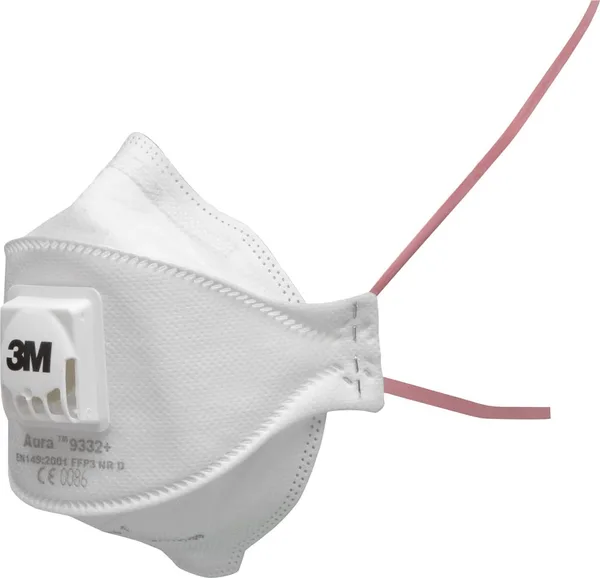
3M Aura 9332+ FFP3 / N99-Equivalent with Valve (10-Pack)
Foldable FFP3 from 3M with Cool Flow valve to reduce heat sensation during prolonged use. CE 0086 certified (European notified body), EN 149:2001+A1:2009 NR D, operational equivalent to NIOSH N99. Filters ≥99% of dense smoke from a nearby wildfire, concentrated volcanic ash, or mold dust during flooded basement cleanup. 10-pack sufficient for the extreme scenarios of a family for several years. (US users: equivalent NIOSH-approved alternatives include 3M 8511 P95 or 3M 8233 N100.)
Gloves: nitrile, latex, or vinyl for biological cleanup
Nitrile has eaten latex over the last ten years. For good reasons. Let’s go.
Why nitrile beats latex
- Allergy: per CDC NIOSH data, up to 8-12% of healthcare workers exposed to latex develop sensitization, with general population rates around 1-6%. A latex glove in a family cleanup is unnecessary roulette.
- Chemical resistance: nitrile holds up against bleach, ethyl alcohol, fats, and household solvents. Latex degrades in minutes with several of these products.
- Puncture resistance: nitrile is 3 to 5 times more resistant to puncture and tear than latex of equivalent thickness.
- Storage: a closed nitrile box lasts 3-5 years in household conditions per Ansell. Latex dries out and becomes brittle in 2-3 years.
- Damage visibility: blue or black nitrile gloves make any tear or puncture obvious. With white latex, you find out late.
The ASTM and EN standards that separate the kitchen glove from the emergency glove
The standards you need to recognize on the package:
- ASTM D6319 (US): standard specification for nitrile examination gloves.
- ASTM F1671: resistance to penetration by blood-borne pathogens.
- EN 374-2: penetration test (tightness against holes).
- EN 374-4: chemical degradation against specific products.
- EN 374-5: protection against microorganisms. If it carries the biohazard pictogram and the word “VIRUS”, it also passed ISO 16604 against virus penetration.
- EN 455 (1 to 4): single-use medical gloves.
For post-flood cleanup, handling spoiled food, or caring for a sick family member, look for at least ASTM D6319 + ASTM F1671 in the US, or EN 374-5 with “VIRUS” pictogram in EU-marked products. Don’t settle for less. Period.
The thickness you need by task
- 3-4 mil (occasional medical/kitchen use): degrades in 30-60 minutes with household chemicals. Fine for short tasks.
- 6-8 mil (post-flood cleanup, handling splinters, debris): lasts 2-3 hours and resists puncture better.
After hurricanes Helene and Ian, multiple volunteer groups and homeowners reported infected wounds from using thin gloves while handling mud with broken glass. The $1 difference between a 3-mil and a 6-mil glove you pay with a single ER visit. Your call.
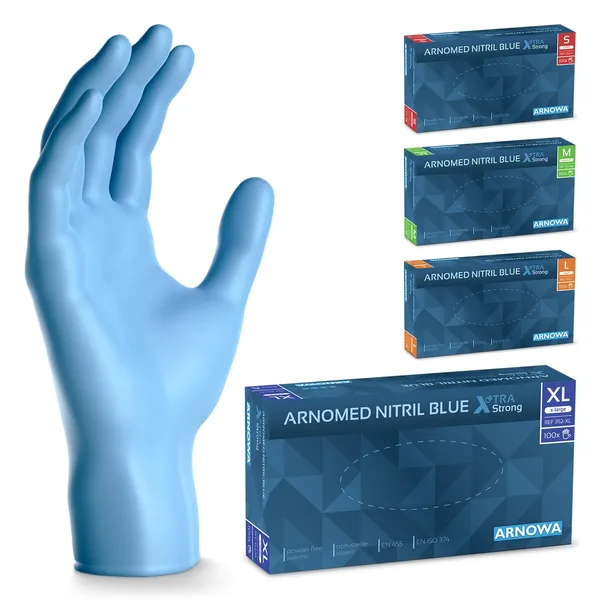
ARNOMED Heavy-Duty Nitrile Gloves (100-Pack, 50% Thicker)
Reinforced blue nitrile (approximately 6 mil thickness vs 3-4 mil standard nitrile), powder-free and latex-free. Compliant with EN 455 and EN 374, German medical-grade brand. Withstand mud cleanup with broken glass after a hurricane or handling spoiled food 48 hours into a power outage without ripping on first use. Box of 100 units, size XL. (US users: equivalent ASTM D6319 alternatives include Microflex MidKnight 8 mil or Adenna Phantom 9 mil.)
Sealed safety goggles ANSI Z87.1+: the forgotten piece of household PPE
It’s the equipment most often forgotten and the one that prevents the most ER visits. Look.
Why your normal glasses (even sunglasses) don’t protect
They have no lateral seal. A splash of concentrated bleach or contaminated water reaches the eye mucosa through the gap between the temple and the face. The safety goggles you need for home are goggle-style (with seal around the entire perimeter), not “cycling-style” open. No discussion.
What to look for in real ANSI Z87.1+ / EN 166 goggles
- Full lateral seal (laboratory or industrial goggle style).
- Optical class 1 or 2 (adequate transparency for prolonged use).
- Impact resistance class F (35 m/s, sufficient for household use). If you’ll handle glass, class B.
- Anti-fog if you’ll clean with steam or hot bleach. Without this, you take them off after 5 minutes. Guaranteed.
- Z87.1+ (with the plus) marks high-velocity impact resistance per ANSI standard. This is what OSHA requires for workplace PPE.
When you need them at home
- Cleaning with diluted bleach (1:9). Eye mucosa is extremely sensitive to chlorine.
- Dried mud dust after flooding (high PM10 in suspension).
- Splashes when pumping out contaminated water.
- Handling fuel for a camp stove or gasoline for a generator.
Which specific model we buy at EmergencyKitLab
After reviewing industrial and household-emergency-specific models, the goggle-style panoramics from Uvex and 3M best combine full facial seal, real anti-fog, and reasonable price for a household kit you hope never to use. The difference between basic safety glasses at $5 and a panoramic with interior anti-fog coating shows up the moment you use them with the mask on: cheap ones fog up in 30 seconds and you end up taking them off, good ones hold up through complete basement cleanup without losing vision.
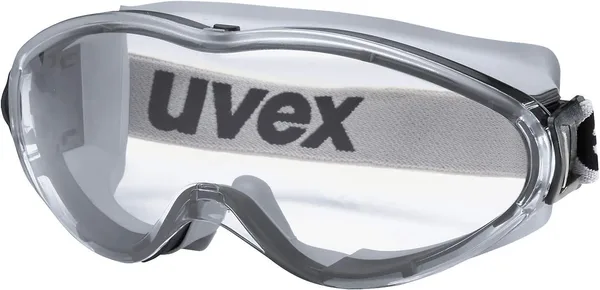
Uvex 9302 Ultrasonic: Sealed Goggles EN 166 / ANSI Z87.1 Equivalent Anti-Fog
Uvex panoramic goggles with full facial seal and adjustable elastic strap. Compliant with EN 166 and EN 170 (operational equivalent to ANSI Z87.1+). Supravision extreme anti-fog interior and anti-scratch exterior coating. Wearable over prescription glasses (no need to give up vision for protection). 1,185 reviews on Amazon with 4.5 stars, German manufacturer of industrial eye protection. For cleaning with bleach, post-hurricane dust, and splashes of contaminated water.
Body protection: Tyvek vs washable work clothing + hot shower
Here’s the honesty: most homes don’t need a Tyvek coverall. But there are specific scenarios where they do.
When a Tyvek 500 coverall is worth it at home
- Cleaning a flooded basement after a hurricane or burst pipe.
- Shed or garage with rodent presence (hantavirus risk per CDC, especially in the Four Corners region, 30-50 confirmed annual cases). The CDC protocol requires N99 or P100 + nitrile + goggles + Tyvek for these tasks.
- Room with dense mold after sustained humidity.
- The standard to look for is EN 14126 (biological protection) combined with Type 5 (particles) and Type 6 (splashes). DuPont Tyvek 500 meets all three. US-marketed Tyvek 400 with ASTM F1671 is the equivalent for blood-borne pathogen protection.
When you DON’T need it (the EmergencyKitLab honesty)
- General household use.
- Routine cleanups with gloves and mask.
- Caring for sick family member at home (a disposable gown or washable clothing at 140°F suffices).
Reasonable alternative: dedicated clothing + complete shower
For less extreme scenarios: dedicated work clothing covering arms and legs, long sleeves, high socks, and closed shoes. To wash at 140°F immediately after in a closed bag. And complete shower at the end (wash hair and folds well, where particles accumulate).
The operational trick almost no one explains? Leave contaminated clothing in a closed bag until washing, not in the dirty laundry hamper. Particles transfer to clean clothes they touch. Boom, cross-contamination.
A note on Tyvek seams that manufacturer descriptions don’t say
Standard Tyvek 500 has stitched, not welded, seams. Seams are the weak point. Amazon US reviews document tears after a single intense use in cleanup with debris. If you’re going to a really contaminated cleanup, there are versions with sealed seams (more expensive, around $30-50 per unit).
The official DuPont Tyvek we recommend when you need to buy one
Many cheap clones circulate on Amazon under names like “Tyvek-style” or “Tyvek-type” without being DuPont manufacture. If you’ll use it for flooded basement cleanup after a hurricane or for handling rodents in a shed (scenarios where biological filtering really matters), buy official DuPont Tyvek. The price difference with a clone is a few dollars, but the guarantee of real EN 14126 / ASTM F1671 compliance you only have with the original. For other household scenarios, don’t buy a coverall and resolve with washable clothing at 140°F as we explained before.
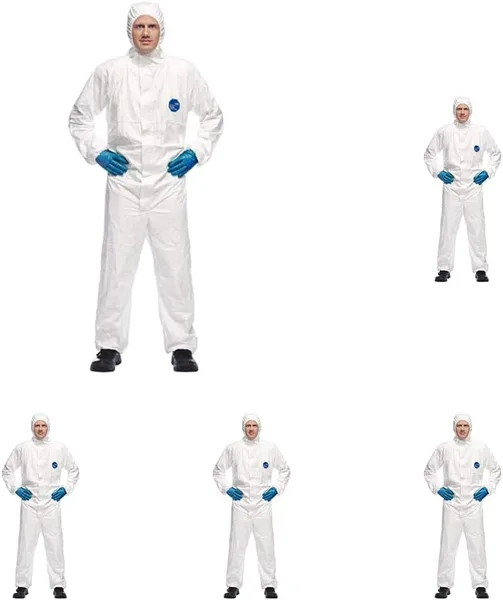
DuPont Tyvek 500 Xpert: Coverall Category III Type 5/6 with Hood
Disposable coverall from official DuPont (no clone) with integrated hood. Category III, Type 5-B (particles) and Type 6-B (splashes), EN 14126 standard for biological protection (US equivalent: ASTM F1671 for blood-borne pathogens). For post-flood basement cleanup, room with dense mold, or rodent-infested shed cleanup. Size XL, lightweight, breathable but liquid-impermeable. What the CDC protocol recommends for these scenarios. (US users: equivalent ASTM-marked alternative is DuPont Tyvek 400 TY127S.)
Storage and real expiration of the PPE you have stored
Heads up. This is the section no competitor gives you. The manufacturer data on shelf life is in their technical bulletins, not on the product box.
Real shelf life per major manufacturers
| Equipment | Official shelf life | Real shelf life (optimal household storage) | Source |
|---|---|---|---|
| N95 / FFP2 / FFP3 masks | 3-5 years | 4-5 years in airtight box + desiccant, interior closet | 3M Technical Bulletin “Respirator Shelf Life” |
| Nitrile gloves (closed box) | 3-5 years | 3-4 years closed; 12-18 months if open | Ansell Technical Documentation |
| Tyvek 500 coverall | 5 years | 5 years in original sealed bag without UV | DuPont Tyvek Storage Guide |
| ANSI Z87.1 / EN 166 goggles | No official expiration | 5+ years (plastic may yellow) | Honeywell / uvex |
The real failure points (what happens before expiration)
- Masks: elastic straps are the first point that fails. They dry out, lose elasticity, and break when stretched gently. If a new mask in its package has hard straps to the touch, discard that whole box.
- Nitrile gloves: if the box is open and exposed to UV light (near a window), they degrade in months, not years. Small microscopic cracks appear that you don’t see but that let water and oil pass.
- Tyvek: seams become brittle with sustained UV light.
How to store your PPE so it makes it alive to the emergency
- Airtight box with desiccant (silica gel packets) inside the closet where you keep the rest of the emergency kit.
- Constant temperature below 77°F (25°C). A garage in the sun that hits 95°F (35°C) in August halves shelf life.
- Humidity below 80%. The bathroom closet is not a good place.
- No direct UV light. Closed drawer or opaque box.
It’s a pattern documented in preparedness forums and reports from users with N95s stored since 2020: those who put them in an airtight box with desiccant report in 2026 elastic straps like new. Those who left them on the kitchen counter, in the car, or in a cardboard box in the garage that hits over 95°F in August, report dried-out straps at 2-3 years, straps that break when stretched gently, mask discarded even before the official expiration date. Same product, different storage, completely different result. Bingo.
Common errors when using household PPE (documented by OSHA and CDC)
Having the equipment isn’t enough. Is it hard to do right? Harder than learning to use the new coffee pod machine? Harder than understanding the electric bill? Not really. These four errors are the most documented by OSHA and CDC/NIOSH.
Error 1: bad hygiene when removing PPE
CDC and JAMA Internal Medicine studies (Tomas et al. 2015 and COVID series) confirmed that more than 50% of healthcare worker contaminations occurred while removing PPE, not while wearing it. The correct procedure:
- Wash hands before starting.
- Remove gloves first (by the wrist, inward, without touching the exterior with your skin).
- Then goggles (gripping by the temples, not the lens).
- Then the mask (by the straps, without touching the front filter).
- Wash hands again.
Error 2: reusing an N95/FFP marked NR as if it were reusable
NR means Non-Reusable. Washing an N95/FFP mask eliminates the electret filter (the electrostatic charges that hold fine particles) and reduces effectiveness drastically, per studies from NIOSH and KU Leuven University published in 2020. In occasional household use? Leaving the mask in a paper bag for 72 hours between uses was a CDC-recommended compromise during COVID. It’s not official reuse, but it limits risk if you don’t have replacement.
Error 3: not doing a fit-test at home before you need it
Without correct fit, an N99 behaves like an N95. CDC studies are categorical on this. Wait, let me explain better: although the N99 filter retains 99% of the aerosol that passes through the filter, if the facial seal leaves a millimeter of gap at the nose bridge or cheek, air enters there unfiltered and effective protection collapses. The home test we recommend:
- Put on the mask with straps behind your head (they seal better than behind your ears).
- Cover the filter with both flat hands and inhale strongly.
- If air enters at the edges (under the eyes, side of the nose), it doesn’t seal. Adjust the nose clip.
- If the mask collapses toward your face when inhaling, the seal is correct.
Do this now, with a mask from your box, before you need it. Don’t wait for an emergency.
Error 4: beard or significant facial hair invalidates the seal
Studies and official infographic from NIOSH (CDC) show that facial hair of 1-2 days drastically reduces the fit factor of an N99, to the point of equating protection with much lower levels. If you live with a full beard and need serious PPE for a real scenario (dense smoke, ash), the options are: shave before use, or use equipment with full face mask (much more expensive, outside the household scope of this article).
How much PPE does a family of 4 need: the concrete shopping list
If you don’t want to think anymore, this is the list. Three levels by budget and exposure.
| Equipment | Minimum (~$65) | Recommended (~$95) | Complete (~$130) |
|---|---|---|---|
| N95/FFP2 masks | 50 units | 50 units | 100 units |
| N99/FFP3 masks | — | 10 units | 20 units |
| Nitrile gloves 6 mil | 100 units | 100 units | 200 units (2 boxes) |
| ANSI Z87.1 goggles | 1 pair | 2 pairs | 2 pairs premium |
| Tyvek 500 coverall | — | — | 2 units |
| Airtight box + desiccant | — | 1 | 1 |
Why these specific quantities
- 50 N95 = 4 people × about 12-13 changes each in 1-2 weeks of occasional use with 4-6 hour replacements in serious scenario.
- 10 N99 = punctual use reserved for serious scenarios (rodent cleanup, evacuation near front of a wildfire).
- 100 gloves = double pairs for long tasks (post-hurricane mud cleanup in shifts).
- 2 pairs of goggles = one for the main task, another spare if the strap breaks or it’s lost.
- 2 Tyvek coveralls = one per adult doing extreme cleanup. Kids don’t need them.
This list complements, doesn’t replace, the 72-hour emergency kit for families and the complete emergency first aid kit that cover the rest of the needs in a household emergency.
How to dispose of used PPE after a biological cleanup
- Double sealed bag, regular trash (not recycling bin).
- Wash hands with soap and water immediately after removing.
- In post-flood or rodent cleanups, treat as contaminated household waste. It’s not medical waste unless you’re caring for a patient with documented infection.
Important warnings that don’t fit in a table
- An N95/FFP mask does not protect against carbon monoxide (CO). If you use a gasoline generator or gas stove in a poorly ventilated closed space, no N99 saves you. CO is odorless and colorless and kills silently: never use a generator indoors, in a closed garage, or a semi-open porch. A household CO detector certified UL 2034 (between $15 and $40) is more effective than any PPE against this risk. After Winter Storm Uri 2021 in Texas, CDC reported hundreds of CO poisoning cases, most from improvised heating.
- Bleach + ammonia = toxic chloramine. Never mix, always ventilate the cleanup area.
- Rodents in shed or garage: never sweep dry or vacuum. It aerosolizes fecal particles and maximizes risk. Spray with diluted disinfectant, let sit 5-10 minutes, and pick up with damp cloth.
Being prepared isn’t being a doomsday prepper
Look, at the end of the day, household PPE isn’t a bunker fantasy. It’s exactly what the Red Cross recommended after Hurricane Helene in North Carolina, what the CDC asked for during California wildfire smoke events, and what state health departments published in their communications after Winter Storm Uri in Texas. The difference is having it stored before the warning arrives, not after the hardware stores and Amazon Prime are out of stock in four hours.
The investment is modest ($65-130 for a family) and well stored covers four or five years. If you want to see how this fits with the rest of your plan, read our guide to family evacuation plan step by step. You stash it, leave it in the closet, and hope to never use it. But the day you need it, you’ll be very glad you had it. There you go.
This guide contains Amazon affiliate links. If you buy through them, we receive a small commission at no additional cost to you. This helps us keep content updated.
Prices indicated are approximate and may vary. Check the current price on Amazon US before buying.
In any real emergency, always follow the indications of FEMA, your local emergency services (911), and health authorities (CDC, state health departments). The information in this guide is for preventive preparation and does not replace the advice of healthcare professionals or official instructions in a specific emergency.
Prices are indicative and may vary on Amazon.
Mentioned Gear
Hand-picked by our team.
FFP2 / N95-equivalent Respirator Mask CE Pack 50 Units
- Weight
- 600 g
- Units
- 50
Affiliate link. See our Transparency policy.
3M Aura 9332+ FFP3 Respirator with Cool Flow Valve Pack 10 Units
- Weight
- 250 g
- Units
- 10
Affiliate link. See our Transparency policy.
ARNOMED Heavy-Duty Nitrile Gloves Extra Strong 50% Thicker Size XL Pack 100
- Weight
- 700 g
- Units
- 100
Affiliate link. See our Transparency policy.
The links above are affiliate links. Transparency policy.
Looking for products mentioned in this article?
Products reviewed by our team on Amazon, all rated 4+ stars.
US emergency preparedness editorial team
The EmergencyKitLab editorial team turns US emergency guidance into practical plans for hurricanes, tornadoes, wildfires, winter storms, earthquakes and extended outages. We focus on affordable household readiness, region-specific risks and products that perform under real conditions.
Frequently Asked Questions
Does a surgical mask protect me from wildfire smoke from a nearby fire?
Are the Chinese KN95 masks I bought online during the pandemic safe?
How long do the FFP/N95 masks I have stored from the pandemic last?
Do I need a Tyvek coverall if I'm not a healthcare worker?
How much does a household PPE kit cost for a family of 4?
Related Articles
72-Hour Emergency Kit 2026: Checklist + Budget (Family)
EmergencyKitLab 2026 guide: complete 72-hour kit checklist from $50/person. Winter Storm Uri-tested tips + the #1 water mistake families still make.
15 min readHow to Build a Complete Emergency First Aid Kit (2026 Guide)
Step-by-step guide to building an emergency first aid kit based on Red Cross standards. Supplies list, medications, and scenario-specific additions.
10 min readEarthquake Preparation at Home: A US Guide for Seismic
How to prepare your home and family for an earthquake in California, the Pacific Northwest, Alaska, and the New Madrid zone. FEMA-aligned guidance, real.
11 min read