Vehicle Emergency Kit: Complete Guide for Your Car 2026
Build your personal emergency plan
Free, no sign-up, takes 5 minutes.
The Texas freeze of February 2021 left thousands stranded on highways for 12+ hours. Some without food, water, or warm clothing in 10°F temperatures. People died in their cars within sight of the road, because the only thing between them and freezing was a thin sweater and an empty water bottle.
A vehicle emergency kit isn’t paranoia. It’s the difference between an annoying delay and a survival situation. And it costs less than a single tow.
This guide covers what works, what’s filler, and how to build one that actually fits the real emergencies US drivers face.
Why every vehicle needs an emergency kit
The numbers from AAA and NHTSA are sobering:
- 69 million roadside assistance calls in 2023 (US)
- #1 cause: flat tires (39% of calls)
- #2 cause: dead batteries (26%)
- #3 cause: lockouts (17%)
- Average wait time: 60-120 minutes in good weather, 4+ hours during storms
Beyond breakdowns, a vehicle kit covers:
- Winter storms stranding you on the highway (Texas 2021, Buffalo 2022, I-95 Virginia 2022)
- Summer breakdowns in remote areas where heat exhaustion sets in fast
- Hurricane evacuations with traffic stalls of 6-12+ hours
- Wildfire evacuations where you may have minutes to leave
- Mechanical failure in cellphone dead zones
The base kit: what every vehicle needs year-round

Tools and basics
- Jumper cables: 8-gauge minimum, 16-20 feet length. Avoid the cheap 6-foot ones.
- Portable jump starter with USB ($50-100). Replaces needing another vehicle, and it charges phones too.
- Tire inflator with sealant ($30-50). Gets you 50+ miles to a shop. Far more practical than spare-changing on the shoulder.
- Multi-tool (Leatherman or Gerber), $40-100. Pliers, knife, screwdriver, file in one tool.
- Sturdy LED flashlight + headlamp: handheld for repairs, headlamp for hands-free.
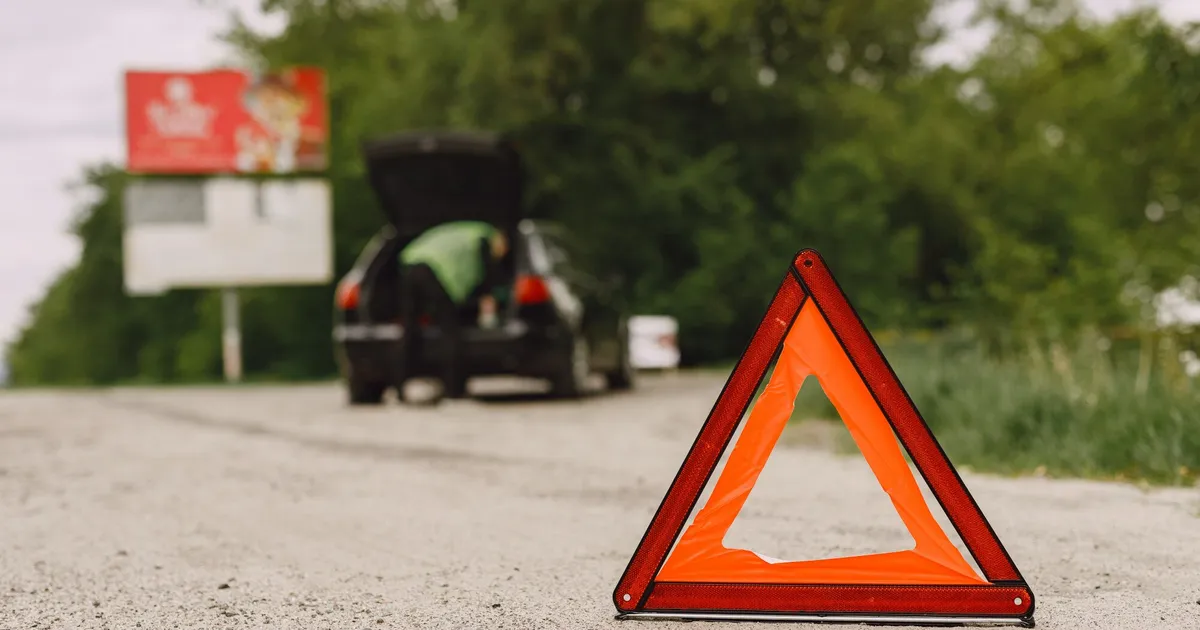
- Reflective triangles or LED flares ($20-30). Visibility from 500+ feet. Required by law in some states for commercial vehicles, recommended for everyone.
- Duct tape and zip ties for temporary repairs.
Personal/survival
- Bottled water: 1 gallon per person minimum. Replace every 6 months.
- High-calorie food bars such as Datrex 3,600 cal bars or Mainstay rations. 5-year shelf life. 1 bar per person.
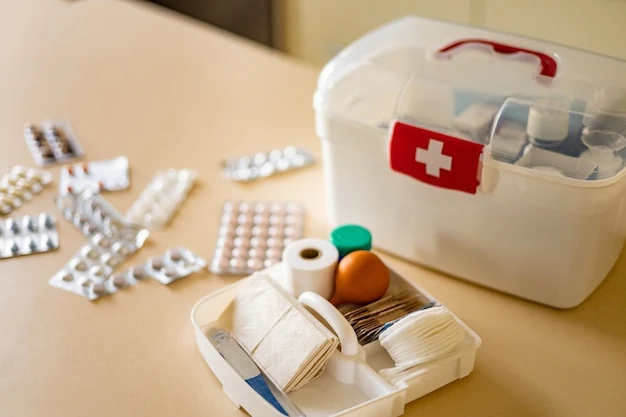
- First aid kit, minimum 100 pieces. Bandages, antiseptic, gauze, gloves, scissors, tape, pain reliever, tourniquet (CAT-style).
- Mylar emergency blankets, 1 per person, $1-3 each. Reflect 90% body heat.
- Hand sanitizer + wet wipes for hygiene and minor wound cleaning.
- Cash: $50-100 in small bills. ATMs fail when power’s out.
Documents
- Vehicle registration and insurance card, laminated, in the glove box.
- Roadside assistance contact info: AAA, your insurance, your state’s emergency tow info.
- List of family contacts, written, not just on the phone.
Winter additions (October to April in cold states)
US winter kills more drivers than all natural disasters combined. The base kit isn’t enough.
- Wool blanket (or military surplus). Synthetic loses warmth when wet; wool retains it
- Hand warmers + body warmers (HotHands or similar), 24+ in the kit
- Snow shovel (folding), $20-30
- Ice scraper with brush: keep one inside the cabin
- Kitty litter or sand bag, 10-20 lbs for traction under tires when stuck
- Tire chains if you live in or drive through chain-required areas (Sierra, Rockies, Cascades)
- Extra warm layers: fleece jacket, gloves, beanie, wool socks. Even if you wear them daily, having backups in the car saves you when the heater fails
- Candle and matches in a metal tin. A single candle in a closed car raises interior temp 5-10°F. Survival use only with a window cracked.
The Texas freeze of 2021 demonstrated this: people who had wool blankets and warm layers in the car survived. People who had a t-shirt and sweater did not.
Summer additions (May to September, especially Southwest)
Heat kills differently. Slower, sneakier. By the time you feel really thirsty, you’re already dehydrated.
- Extra water: double the base. Heat doubles consumption. 2 gallons per person.
- Electrolyte tablets (Liquid IV, Nuun). Water alone causes hyponatremia in extreme heat
- Sunscreen and lip balm for exposed time on the side of a road in summer
- Reflective sun shade for windshield, drops interior temp 30°F
- Wide-brim hat for sun protection while waiting for assistance
- Cooling towels (chamois-style): wet, wring, drape on neck. 20°F felt cooling.
In Arizona, a stranded driver can hit heat exhaustion in 30-45 minutes at noon. Be ready.
Special scenarios
Hurricane evacuation
Coastal states (FL, TX, NC, SC, LA, MS, AL, GA, VA): traffic stalls during evacuations are guaranteed. The 2017 Hurricane Irma evacuation had Florida I-75 backed up 200+ miles.
Add to base kit:
- 2-3 extra gallons of water
- 5-7 days of food bars (you may not reach safe lodging quickly)
- Portable phone charger (20,000 mAh+)
- Paper map of evacuation routes
- Cash for gas in case ATMs are down inland
Wildfire evacuation (CA, OR, WA, CO, AZ, NM, MT)
Wildfires move fast. Your evacuation notice may come with minutes to spare.
Add to base kit:
- N95 or P100 respirator masks (1 per person)
- Goggles for smoke
- Wool blanket (cotton catches embers)
- Wet towels in plastic bag (for filtering smoke if you have to drive through)
- USB phone charger always plugged in
Remote mountain/desert driving
If you regularly drive Forest Service roads, the desert Southwest, or rural areas with no cell service:
- Satellite communicator (Garmin inReach Mini, ZOLEO), $250-400 + monthly subscription. Sends SOS even with no cell signal
- Topographic map of your area
- 5+ gallons of water (heat exhaustion kills hikers and stranded drivers)
- Extra food (3-5 days)
- Survival blanket and bivvy sack
Where to put the kit
Trunk: Main kit in a hard plastic case or duffel. Easy to see, easy to carry out if you need to abandon the vehicle.
Glove box: Documents, basic flashlight, multi-tool, granola bar, hand sanitizer.
Center console / seatback pocket: Cell phone charger, sunglasses, lip balm, hand warmers (winter).
Cabin floor (winter only): Wool blanket. Don’t keep it in the trunk where it freezes.
Spare tire well: Jumper cables, tire inflator, basic tools.
Maintenance schedule
- Every 6 months: Replace water, check food bar dates, test flashlight, check first aid expiration dates.
- Every season change: Swap winter ↔ summer items.
- Annually: Test jumper cables, replace any rusted items, restock used supplies.
Set calendar reminders. The kit you forget to maintain is the one that fails when you need it.
Mistakes to avoid
1. Buying a $20 “complete” kit on Amazon. They contain 200 useless pieces and no actual quality items. A $20 kit gives you a $5 first aid pouch with $15 of plastic filler.
2. Forgetting water rotation. Water doesn’t expire, but bottle plastic leaches over time. Replace every 6 months.
3. Only carrying it in winter. Summer breakdowns kill more people via heat than winter via cold.
4. No phone backup. A 20,000 mAh power bank in the kit is essential. Calling 911 with a dead phone doesn’t work.
5. Trusting the spare. Many newer vehicles ship without a spare tire. Check yours. If no spare, the inflator + sealant becomes critical.
6. Storing gas in containers in the vehicle. Fire hazard, illegal in most states. Keep the tank above 1/4 instead.
7. No paper map. GPS fails in dead zones, after EMP, with empty phone. A $5 state atlas saves you.
Our recommendation
If you don’t have a vehicle emergency kit, today is the day. The investment is $80-150 for a complete kit, and it lasts years with light maintenance.
Don’t fall for the “all-in-one” $20 specials. Build it from quality components: a real Leatherman, a real Streamlight, a real Adventure Medical first aid kit. The difference is what works when it matters.
Most stranded-driver fatalities in the US are preventable. The kit isn’t paranoia. It’s the cheapest insurance you’ll ever buy.
For full preparation, our emergency preparedness ultimate guide covers the complete picture. And our 72-hour family kit handles the home side.
Information in this article is for educational purposes. In real emergencies, call 911 or your roadside assistance provider.
EmergencyKitLab participates in the Amazon Services LLC Associates Program. When you buy through our links, we earn a small commission at no extra cost to you.
Prices are indicative and may vary on Amazon.
Looking for products mentioned in this article?
Products reviewed by our team on Amazon, all rated 4+ stars.
US emergency preparedness editorial team
The EmergencyKitLab editorial team turns US emergency guidance into practical plans for hurricanes, tornadoes, wildfires, winter storms, earthquakes and extended outages. We focus on affordable household readiness, region-specific risks and products that perform under real conditions.
Frequently Asked Questions
What should every vehicle emergency kit include at minimum?
Do I need different kits for summer vs winter?
What's the most overlooked item in a vehicle kit?
Should I keep gas in a container in my car?
Where should I store the kit in my vehicle?
Related Articles
72-Hour Emergency Kit 2026: Checklist + Budget (Family)
EmergencyKitLab 2026 guide: complete 72-hour kit checklist from $50/person. Winter Storm Uri-tested tips + the #1 water mistake families still make.
15 min readEmergency Preparedness: The Ultimate Guide for US Families
Complete emergency preparedness guide for American families. FEMA-based checklists, real budgets, and the mistakes most people make.
18 min readFamily Evacuation Plan 2026: Step by Step
Escape routes, meeting point, roles for each person, and practice drill: create your family evacuation plan step by step and act before the emergency arrives.
9 min read