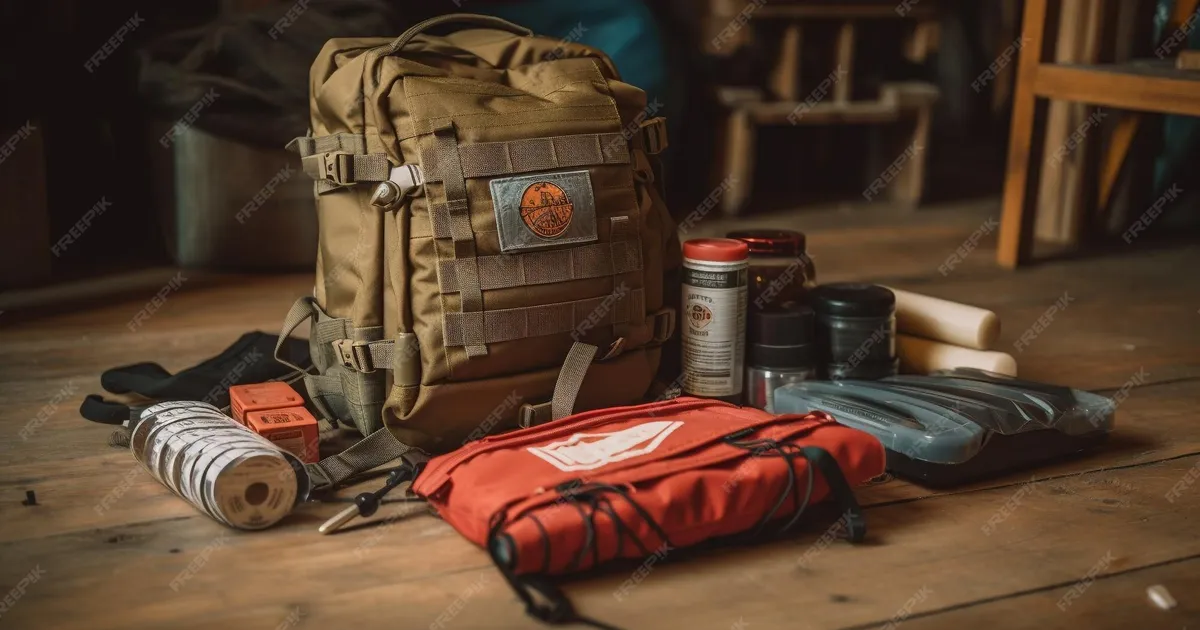
Go-Bag vs Home Kit: Which to Build First in 2026
Build your personal emergency plan
Free, no sign-up, takes 5 minutes.
When Hurricane Harvey forced thousands of Houston families to evacuate with minutes of warning, the ones who had a go-bag ready by the door were out in 2 minutes. The ones who did not left with nothing but the clothes they were wearing. But when the 2021 Texas freeze knocked out power across the state for days, go-bags were useless: what you needed was already at home.
Go-bag versus home kit. The answer depends on specific things you can evaluate this afternoon. And no, it is not the same for everyone.
Go-Bag or Home Kit: What Is the Difference
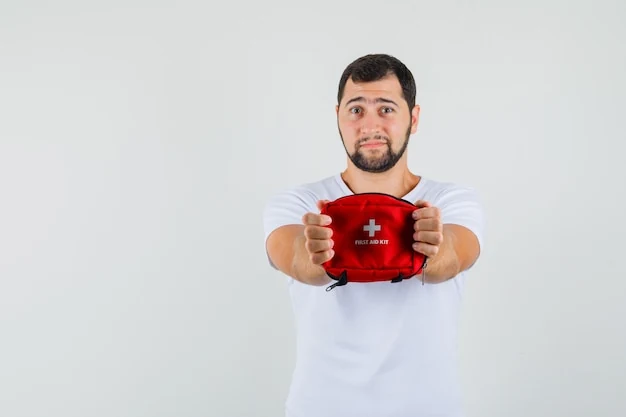
The go-bag (also called a bug-out bag) is a portable kit you grab and leave in under 2 minutes. Inside: water, some food, flashlight, basic first aid kit, copies of essential documents and cash, and a change of clothes. Seventy-two hours of self-sufficiency. The home kit is different: a supply stockpile for riding it out without leaving, with the advantage that you do not have to worry about weight or bulk.
In theory they are complementary. In practice, almost everyone builds whichever seems easier — and ends up without what they actually need for their area.
FEMA distinguishes two basic scenarios: sheltering in place and evacuation. For both, the minimum standard of self-sufficiency is 72 hours. The go-bag sacrifices capacity for mobility. The home kit does the opposite.
What you are about to read comes from reviewing manufacturer specs, reading opinions from prepper forums, consulting Red Cross and FEMA manuals, and most importantly from opening kits that had been stored for months to check what was still in good shape and what was not.
When You Need to Evacuate vs When to Stay
If you have to evacuate, the go-bag is what saves you. Hurricanes along the Gulf Coast and Atlantic seaboard can give you 15-30 minutes of warning. Wildfires in the West, sometimes less than 20 (the Maui fires of 2023 proved that). Families who have practiced drills a couple of times a year get out in 2-5 minutes with the bag. Those who have not take 15-20 minutes or more. That 10-15 minute difference, with water rising, is not a statistic. It is what decides whether you walk out dry or wade through waist-deep floodwater.
Now, there are emergencies where you do not leave home. The 2021 Texas freeze did not require evacuation, but it left millions without power, ATMs, or cell service. The 2020 pandemic. Supply chain disruptions. Ice storms. Extreme heat waves. In all those cases, what you need is the home supply kit.
According to accounts shared on forums and social media after major disasters, what people missed most was not food or water. It was light. A headlamp per person would have transformed the experience of those first nights. It does not appear on any generic pre-made kit list, but anyone who has spent an entire night in pitch darkness in their own home understands instantly.
If you want to assess the most likely risks in your area, our emergency preparedness ultimate guide covers how to make that evaluation.
What You Gain and Lose with Each Option
In portability there is no debate: the go-bag, you grab it and leave in 60 seconds. The home kit does not move. If you evacuate, it stays behind.
In capacity the home kit wins, and by a lot. The go-bag covers 72 hours, period. At home you can stockpile for weeks if you have the space.
Weight is where the go-bag gets complicated. A complete 72-hour bag runs 18-33 lbs, and ideally you stay under 22-26. Firefighters use an operational rule: max 15-20% of your body weight for walks over 30 minutes. It is not just about fatigue. With a heavy pack your center of gravity shifts backward, and on stairs that means higher fall risk exactly when you can least afford it. Think about it: blackout, elevator down (standard without electricity), 33 lbs on your back, kids in front of you, stairs in the dark. The home kit has no weight problem. Put in whatever you want.
Let us talk money. Building the go-bag yourself: $50-150. Home kit for a family of 4 with 72 hours of self-sufficiency: $100-350. Not cheap, but considerably less than most people imagine.
Space depends heavily on your home. The go-bag fits in any closet (35-45 liters). The home kit needs 2-4 storage bins of 15-20 gallons each. Given that about 80 million Americans live in apartments or condos, space is not a minor detail. The standard approach in an apartment: under the bed, entryway closet, or a corner of the storage unit, though storage units have their downsides with temperature swings, as I cover below.
And maintenance is similar for both: review every 6 months for batteries, water, food, and general condition. If you put it on the phone calendar it costs nothing. If you do not, you will not do it.
A note about the backpack itself: if you already have a 35-45-liter hiking backpack, use it. Hiking packs distribute weight between hips and shoulders through a hip belt and adjustable straps — they spread the load so you can walk for hours without your shoulders giving out. Tactical MOLLE packs load almost everything up top and after 30 minutes you start feeling it. Plus, hiking packs do not attract attention on the street and cost less ($30-60 on Amazon versus $40-80 for tactical). It is like choosing between an SUV and a tank for a grocery run. The tank impresses, but the SUV gets you there just the same and nobody stares at you.
For what each format should actually include, the complete 72-hour emergency kit guide for families details every component with real weights and prices.
Which to Build First Based on Where You Live
This is not about preference. It is about where you live and who you live with.
Gulf Coast, Atlantic seaboard, wildfire-prone West, river flood zones — areas with evacuation risk from floods or fire: go-bag first, no question. Your most likely scenario is evacuating with short notice.
Apartment in a city with no immediate natural disaster risk? Home kit first. Blackout or temporary supply disruption. If space is tight, a compact home kit is the way to start.
Family with children: go-bag first. Evacuating with kids without preparation or a prior drill is pure chaos. Stress destroys the ability to improvise, kids freeze up, and the 15-minute window evaporates arguing about who carries what. A detail experienced preppers always mention: keep sturdy closed-toe shoes next to the bag. Lots of people end up evacuating in flip-flops. Seriously.
Rural or isolated area, northern states, heavy snow zones: large home supply kit. Winter Storm Uri proved it across hundreds of communities. Your kit needs to cover days or weeks, not hours. The go-bag is a backup in case things get even worse.
Single person or young couple: go-bag first. Flexibility, low cost, effective in most scenarios. You will have time to build the home kit when you have a spare weekend.
“The biggest mistake in home preparedness is thinking you are ready because you bought a kit. Without practice, without an evacuation plan, and without knowing how to use the gear, the kit is not worth much.” — Emergency management instructor, during community preparedness training
What Nobody Tells You: Corroding Batteries, Kits That Lie, and the Garage Heat
Alkaline batteries are treacherous. After 8-12 months stored, roughly 2 out of 10 leak potassium hydroxide, a corrosive liquid that destroys the metal contacts of flashlights and radios without you noticing. The mechanism is chemical: the zinc casing slowly corrodes as the battery self-discharges, and the alkaline electrolyte (KOH dissolved in water) seeps through the joints. Lithium batteries do not do this because their electrolyte is organic and non-aqueous, so it corrodes nothing.
The cheap solution? Remove them from devices. Store them in a ziplock bag with one of those silica gel packets that come with shoes. Or invest in lithium batteries, which cost 3-4 times more but eliminate the problem entirely and hold their charge for 15-20 years in storage. Depends on how much you want to spend.
We have reviewed kits stored for 2 years under normal household conditions (kitchen drawer, hallway closet, garage). What survived well: sealed freeze-dried food in an interior closet, intact canned goods, unused water filters. What failed: alkaline batteries that lost 20-30% charge and several that leaked KOH, a plastic flashlight with a cracked strap from the temperature cycling in the garage, and PET water jugs that tasted like plastic after a summer in there. Without that periodic review, what you have is not a kit. It is a box of useless material.
Safety notice: if you find a battery that has leaked liquid, do not touch it with bare hands. KOH is corrosive and can cause chemical burns on skin. Use gloves, clean the device contacts with a cotton swab dipped in white vinegar (the acetic acid neutralizes the alkali), and dispose of the batteries at a recycling center.
About the garage or storage unit. In the southern US, an unconditioned space easily exceeds 104 degrees in summer. PET water jugs absorb plastic taste in heat because PET is relatively permeable and becomes more porous at high temperatures, allowing container compounds to migrate into the water. You end up with jugs that taste like plastic and that nobody wants to drink exactly when water matters most. HDPE food-grade containers hold up better (denser molecular structure, less migration), but the ideal is still to keep water inside the house and rotate it every 6-12 months. Cheap mylar blankets stick together in the heat and tear when you unfold them. Thin plastic bins become brittle with temperature swings.
About pre-made kits: be careful. Amazon kits under $50 weigh 7-13 lbs because they include half a liter of water and a couple of bars. “47-piece survival kit” sounds impressive until you discover that many of those pieces are clips and pins counted separately, and that the food portions cover 800 kcal/day when the minimum for an adult should be 1,500. A genuine 72-hour kit for one person — with sufficient water, food with real calories, flashlight, batteries, first aid kit, and documents — weighs at minimum 18 lbs and cannot be built for under $50. If a complete kit costs less than that and weighs less than 18 lbs, what you are buying is a sense of security, not actual security.
Our Recommendation: Start with One, Build Both
First the go-bag. Cost: $50-80. Time: one afternoon. Do not buy everything at once. This week the backpack and flashlight, next week the water and food. A half-built bag is infinitely better than a perfect bag you never assemble. Advice that experienced preppers repeat: once built, put the bag on and walk down the stairs of your building. If you cannot do it comfortably, it is too heavy. Better to find out now than at 3 AM with water at your ankles.
When you have the go-bag, the next step is the home supply kit. Additional cost: $50-150. Organize it in stackable waterproof bins by category. If you want to start with the bare minimum, moving boxes with ziplock bags inside work perfectly. If you prefer moisture protection, airtight bins with snap lids ($15-35 on Amazon) are a better long-term option. Pro tip: stick a label with the date of the last check on each bin. When more than 6 months pass, you see it instantly without having to remember.
Prices shown are approximate and may vary. Check the current price on Amazon before purchasing.
In real emergencies, always follow the instructions of FEMA, the Red Cross, and official emergency services (call 911). The information in this article is guidance for preventive preparation and does not replace the advice of emergency professionals, doctors, or authorities.
This article contains affiliate links. If you buy through them, we receive a small commission at no additional cost to you. That is how we keep EmergencyKitLab running.
Prices are indicative and may vary on Amazon.
Looking for products mentioned in this article?
Products reviewed by our team on Amazon, all rated 4+ stars.
US emergency preparedness editorial team
The EmergencyKitLab editorial team turns US emergency guidance into practical plans for hurricanes, tornadoes, wildfires, winter storms, earthquakes and extended outages. We focus on affordable household readiness, region-specific risks and products that perform under real conditions.
Frequently Asked Questions
Which should I build first, the go-bag or the home kit?
Can I use the same backpack for evacuation and hiking?
How much space does a home emergency kit take up?
Can I have both in a small apartment?
Related Articles
72-Hour Emergency Kit 2026: Checklist + Budget (Family)
EmergencyKitLab 2026 guide: complete 72-hour kit checklist from $50/person. Winter Storm Uri-tested tips + the #1 water mistake families still make.
15 min readBest 72-Hour Survival Backpack 2026: $45 Beats $150
EmergencyKitLab 2026 test: 5 survival backpacks compared. The $45 pick outlasts $150 models, holds 26 lbs — and the one you should skip.
12 min readEmergency Preparedness: The Ultimate Guide for US Families
Complete emergency preparedness guide for American families. FEMA-based checklists, real budgets, and the mistakes most people make.
18 min read