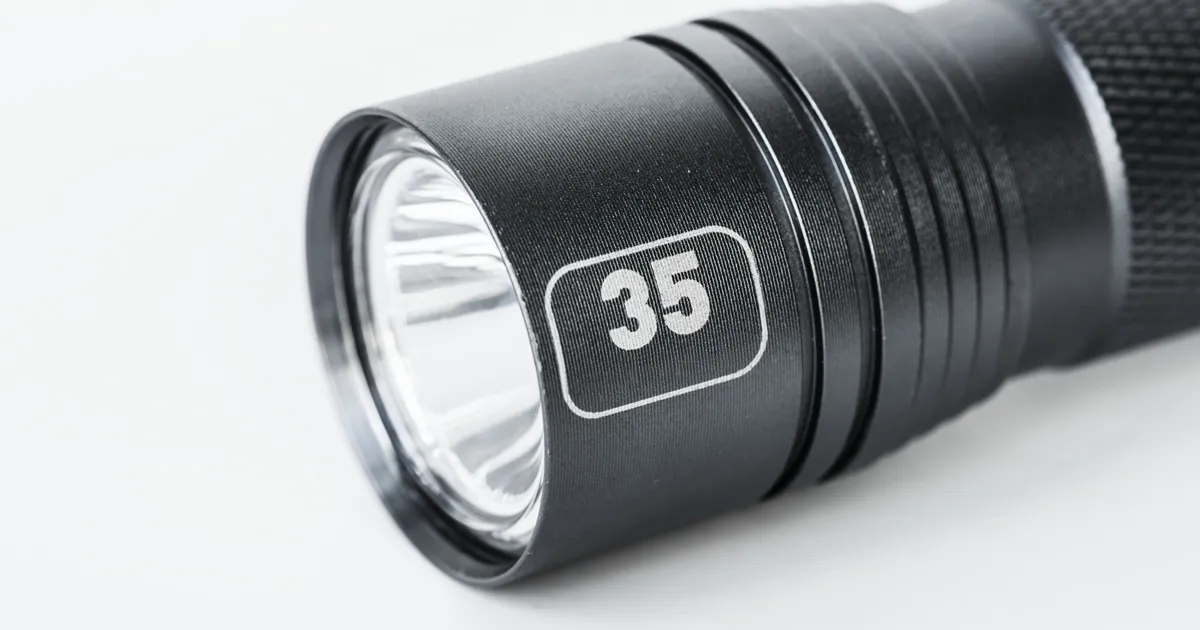
Best Emergency Flashlights for a Blackout 2026
Build your personal emergency plan
Free, no sign-up, takes 5 minutes.
The night Hurricane Helene hit Western North Carolina (September 2024), millions of Americans discovered they didn’t have a working flashlight. The grid went down across multiple states. Phones at 30% battery, candles no one could find, kids crying in the dark. The difference between chaos and calm was having a charged flashlight in the drawer.
Not hypothetical. It already happened. And the question isn’t if there’ll be another blackout, but when. Hurricanes in Florida, ice storms in Texas, PSPS shutoffs in California, derechos in the Midwest. The emergency flashlight isn’t a luxury. It’s the most basic and most overlooked tool in any home.
I’ve compared the most relevant emergency flashlights available on Amazon US in 2026, covering the full spectrum: from the hand-crank that never runs out to the professional headlamp that frees your hands.
Quick comparison: best emergency flashlights 2026
| Model | Lumens | Type | Recharge | Weight | Approx. Price | Best for |
|---|---|---|---|---|---|---|
| Streamlight ProTac HL | 1,000 lm | Handheld | CR123A | 5.6 oz | ~$70 | Tactical reliability |
| Black Diamond Spot 400 | 400 lm | Headlamp | AAA | 3 oz | ~$45 | Hands-free emergency |
| Anker Bolder LC90 | 900 lm | Handheld | USB | 7 oz | ~$25 | Lumens per dollar |
| Eton FRX3+ Hand Crank | 100 lm | Combo | Crank/Solar/USB | 14 oz | ~$50 | No batteries needed |
| Energizer Vision HD | 250 lm | Handheld | AAA | 6 oz | ~$15 | Budget reliable |
| GearLight S1000 (2-pack) | 1,000 lm | Handheld | AAA | 5 oz | ~$20 | Family pack |
1. Streamlight ProTac HL: the professional
If you want the flashlight a firefighter, ranger, or someone who has actually been in the dark would buy, the Streamlight ProTac HL is the answer. 1,000 real lumens, not the inflated lumens of generic flashlights, but lumens measured by an American brand with a reputation to protect.
What works well: The beam is something else. The optic produces a tight throw with usable peripheral spill. IPX7 water resistance, which means submersible, not just splashes. CR123A lithium batteries (10-year shelf life). Aluminum construction, 5.6 oz in hand. 4.7 stars with thousands of reviews on Amazon US.
What they don’t tell you: $70 is real money for a flashlight. And in max mode (1,000 lm) the battery lasts about 1.5 hours. In medium mode (300-400 lm, what you’ll use in a home blackout), runtime climbs to 7-10 hours.
Who it’s for: Anyone who doesn’t want to compromise on quality and knows a good flashlight lasts 10 years. Rural property, garage, primary home emergency kit.
2. Black Diamond Spot 400: hands-free
If you’ve ever tried to hold a flashlight in your mouth while looking for the breaker box, opening a fuse panel, or making bottles in the dark, you know why headlamps exist. The Black Diamond Spot 400 puts 400 lumens on your forehead and gives you both hands back. For a home blackout, that changes everything.
What works well: 3 oz. You wear it and forget it. AAA batteries that store for years without degradation. PowerTap technology lets you switch from full to dim with a tap. Red-light mode preserves night vision for kids. 4.6 stars and thousands of reviews.
What they don’t tell you: $45 for a headlamp seems high compared to $8 generic Chinese headlamps. The difference is in strap comfort, weight balance, beam quality, and Black Diamond’s decades equipping climbers, cavers, and rescue teams. Max-mode runtime is about 4 hours; medium mode (around 100 lm), 30+ hours.
Who it’s for: Any person in a blackout. The headlamp is the flashlight you actually use most in a real emergency because it frees your hands. Essential if you have kids, elderly, or pets.
3. Anker Bolder LC90: compact and powerful
900 lumens in a 7-oz body. The Anker Bolder LC90 is the flashlight that fits in a coat pocket and yet lights up like one three times its size. For people who want lots of light in a small space without complications.
What works well: Raw power impressive for the size. USB rechargeable (micro USB): set it on the charger and done. IPX5 water resistance. Solid construction with belt clip and grippy finish. Best lumens-per-dollar ratio in this comparison.
What they don’t tell you: Turbo mode (900 lm) heats up and the brightness drops automatically after several minutes. Real emergency use will be in medium-low mode (200-400 lm), where runtime is reasonable (4-6 hours).
Who it’s for: Someone who wants powerful + compact to carry always. Bedside, bag, glove box.
4. Eton FRX3+ Hand Crank: never runs out
When everything else is dead (phone flashlight, the rechargeable you forgot to charge, the batteries that sat in a drawer for two years) the hand-crank keeps working. Crank the handle 30 seconds and you have light. Set in the sun for an hour and you have light. Doesn’t depend on anything except your hand or the sky.
What works well: Combo unit: flashlight, NOAA weather radio, AM/FM, phone charger. Crank works. Not powerful, won’t light a football field, but enough to navigate a house, find things, or read emergency instructions. Solar panel complements the crank. Built by Eton, a US brand with decades in emergency radios.
What they don’t tell you: Light output is low: this is pure survival lighting, not performance. Crank requires continuous effort: 1 minute of cranking gives about 5-10 minutes of dim light. Not comfortable for prolonged use.
Who it’s for: Backup. One in the emergency kit, one in the car. Elderly relatives who don’t want to deal with USB chargers.
5. Energizer Vision HD: budget reliable
If you don’t want to spend $45 on a Black Diamond but understand you need at least one reliable handheld, the Energizer Vision HD is the alternative. $15 on Amazon US.
What works well: 250 real lumens with focused beam. Energizer batteries included. Drop-resistant. AAA batteries you can find anywhere and store for years.
What they don’t tell you: AAA batteries aren’t rechargeable (unless you use rechargeables, which is recommended). Plastic body, no real water resistance.
Who it’s for: Tight budget, needs a working handheld. Per-bedroom flashlight backup. Glove box backup.
6. GearLight S1000 (2-pack): family pack
Pack of 2 tactical flashlights for under $20. 1,000 lumens each (peak), AAA-powered, zoomable beam. Better one in your bedroom AND one in your kid’s room than one expensive flashlight in the living room.
What works well: Pack of 2 means you can spread them around the house. AAA batteries (3 per flashlight). Zoom for spot-or-flood. The price makes per-room distribution affordable.
What they don’t tell you: Build is basic plastic. Don’t expect serious drop resistance or real water resistance. The 1,000-lumen claim is peak; sustained output is 200-300 lm. But at $10 per flashlight, these limitations are expected compromises.
Who it’s for: First flashlight purchase for someone with none. Per-room distribution (kitchen, bathroom, bedrooms).
What to look for in an emergency flashlight
Lumens: how much light you really need
Lumens measure total light output. But more isn’t always better for home emergency:
- 50-200 lumens: Enough to navigate the house, go to the bathroom, find things. Hand-crank lights are in this range.
- 300-600 lumens: The sweet spot. Light a whole room, cook, read, do basic repairs.
- 800-1,500 lumens: For outdoors, large garages, when you need throw. Turbo mode drains battery fast.
Practical rule: for a home blackout, 300-600 lumens in medium mode gives you the hours of light you need without dying at hour 2.
Battery runtime: matters more than lumens
A flashlight advertising 2,000 lumens with a 45-minute battery is useless. What matters is hours in medium mode (used 90% of the time):
- Compact rechargeables (Anker, GearLight): 3-6 hours in medium.
- Headlamps with quality batteries (Black Diamond): 8-10 hours in medium.
- Large pro flashlights (Streamlight): 7-15 hours in medium.
- Hand-crank: Unlimited as long as you have a hand to crank.
An average US blackout lasts 4-12 hours. A hurricane can leave you without power for 5-14 days. Plan for the worst credible scenario.
Battery type: rechargeable first, AAA as backup
The real charging hierarchy for emergency flashlights:
- USB (USB-C preferably): full charge before the emergency. With a portable power station, you can recharge during the blackout.
- AAA/CR123A lithium: long shelf life without degradation. Buy lithium batteries (10-year storage) as backup.
- Hand-crank: last resort that always works.
- Solar as complement only. Flashlight panels are tiny.
Water resistance
If your emergency includes rain, flood, or just humidity:
- IPX4: Splash-resistant. Enough for home use.
- IPX7/IP68: Submersible. Streamlight in this category.
- No certification: Cheap flashlights generally have no real protection. Don’t get them wet.
What to buy by situation
Urban apartment blackout
Black Diamond Spot 400 + Energizer Vision HD as backup. The headlamp for hands-free everything. Energizer as fixed light on the table. Total: ~$60.
Bug-out bag
Anker Bolder LC90 + Black Diamond Spot 400. The Anker for power in a pocketable form. Headlamp on your head, hands free for the 72-hour kit. Total: ~$70.
House with kids
Black Diamond Spot 400 + Eton FRX3+ + GearLight 2-pack. Headlamp for primary adult. Eton as kid-friendly crank. GearLight as backup flashlights. Total: ~$120.
Tight budget
Energizer Vision HD + GearLight 2-pack. Under $35 you have a reliable handheld and two backups. Not the best, but infinitely better than the phone flashlight burning the battery you need to call 911.
No-compromise quality
Streamlight ProTac HL + Black Diamond Spot 400 + Eton FRX3+. The Streamlight as primary, Black Diamond as personal headlamp, Eton as backup that always works. Total: ~$165.
5 mistakes people make buying emergency flashlights
1. Buying one flashlight for the whole house. In a blackout, each person needs to move independently. Minimum two, ideally one per person.
2. Storing rechargeables uncharged. Lithium batteries degrade empty. Charge to 60-80% every 3-4 months. Set a calendar reminder.
3. Trusting only rechargeables. If the blackout lasts 3 days, you need options that don’t depend on electricity. A hand-crank, AAA backup batteries, or a power station.
4. Buying for max lumens. 2,000 lumens looks impressive on the box but lasts 30 minutes. What matters is runtime in medium. A 400-lumen flashlight with 10 hours is more useful than a 2,000-lumen one that dies in 30 minutes.
5. Not testing before storing. Take it out of the box, charge it, turn it on, learn the modes. 5 minutes that prevent discovering at 3 AM that the battery was dead from the factory.
Our recommendation
If you ask for one flashlight: Black Diamond Spot 400. The headlamp is the most practical flashlight in a home blackout because it frees your hands. 400 lumens, 3 oz, AAA batteries.
If you want the most powerful: Streamlight ProTac HL. 1,000 real lumens, IPX7, professional quality. The flashlight that lasts a decade.
Tightest budget: GearLight S1000 2-pack. $20, two flashlights, AAA powered. No more excuses.
Total backup: Eton FRX3+. When everything else is dead, the crank keeps cranking.
The most important advice: buy today. Not tomorrow. Not when sales come around. The next blackout won’t give you advance notice.
Prices are approximate. Check current Amazon US pricing before buying.
This article contains Amazon affiliate links. If you buy through them, we earn a small commission at no extra cost to you.
This content does not replace guidance from FEMA, the National Weather Service, or 911 in real emergencies.
Prices are indicative and may vary on Amazon.
Looking for products mentioned in this article?
Products reviewed by our team on Amazon, all rated 4+ stars.
US emergency preparedness editorial team
The EmergencyKitLab editorial team turns US emergency guidance into practical plans for hurricanes, tornadoes, wildfires, winter storms, earthquakes and extended outages. We focus on affordable household readiness, region-specific risks and products that perform under real conditions.
Frequently Asked Questions
Which is the best flashlight for a home blackout?
Is a hand-crank flashlight worth buying?
How many lumens does an emergency flashlight need?
Handheld or headlamp for emergencies?
Can I use my phone's flashlight in a blackout?
Related Articles
72-Hour Emergency Kit 2026: Checklist + Budget (Family)
EmergencyKitLab 2026 guide: complete 72-hour kit checklist from $50/person. Winter Storm Uri-tested tips + the #1 water mistake families still make.
15 min read7 Emergency Radios Tested: Only 2 Survive 48h Without
7 emergency radios tested in 2026: only 2 last 48h without recharging. After Hurricane Helene, we compared real battery life starting at $25.
12 min readBest Portable Power Stations for Emergency Power 2026
From 300Wh apartment units to 2000Wh whole-home backup. Real watt-hours, runtime by appliance, and which size fits your home and emergency.
9 min read