Emergency Communication Guide
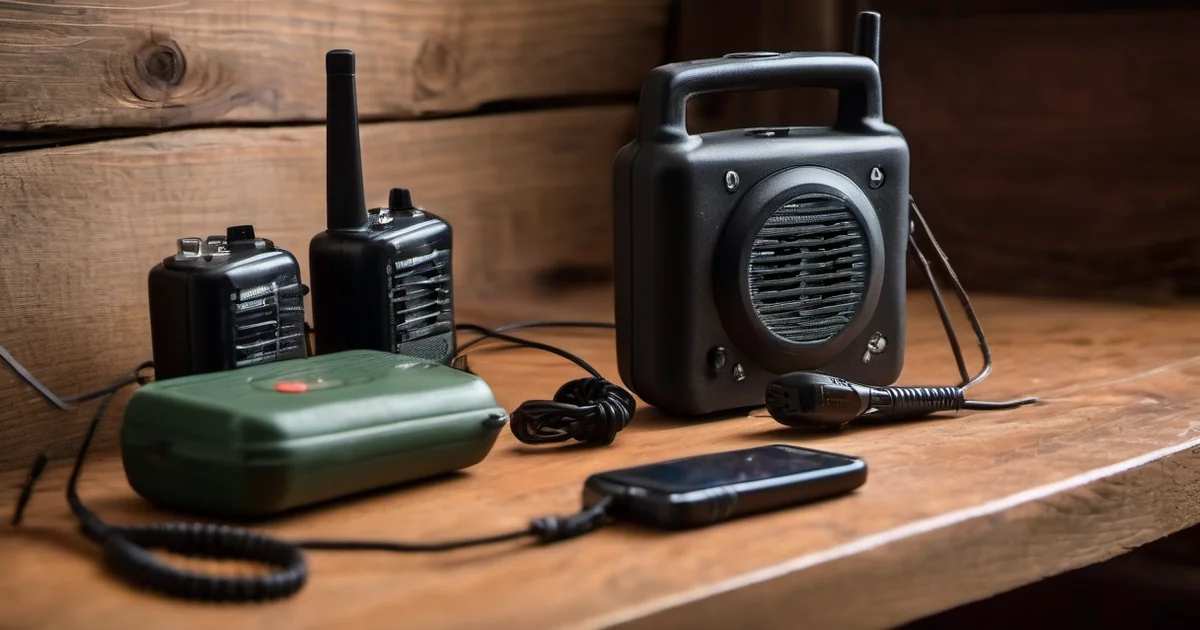
During an emergency, information saves lives. Knowing what is happening, when services will be restored, whether to evacuate or shelter in place — this is just as critical as having water or food. After Hurricane Helene (2024), cell service was down for days to weeks across western North Carolina and east Tennessee, yet National Weather Service warnings kept reaching residents over NOAA Weather Radio and the Emergency Alert System. The problem is that emergencies typically knock out the very communication systems we rely on: cell networks collapse from overload, power to cell towers fails, and your home router goes down.
During Hurricane Maria in Puerto Rico (2017), the entire cell network was out for months across most of the island. During Winter Storm Uri (2021), cell towers in Texas lost backup power after days without electricity. Even in less severe events, cell networks routinely overload within the first hour of a major emergency. Building a backup communication plan is not optional if you want to be genuinely prepared.
The emergency radio: your most reliable lifeline
An AM/FM radio with the NOAA weather band is the most disaster-resistant communication tool you can own. The National Weather Service broadcasts 24/7 on NOAA Weather Radio (162.400–162.550 MHz), and federal, state, and local agencies push official warnings through the Emergency Alert System and IPAWS. Radio stations run backup generators and keep transmitting when everything else goes dark.
What to look for in an emergency radio
- Multiple power sources: batteries, solar, and a hand crank. Models with all three guarantee you can always power it on.
- AM, FM, and NOAA weather band: AM travels farther, especially at night; FM carries local stations; the NOAA band delivers NWS alerts. The best units add SAME (Specific Area Message Encoding) so you only hear warnings for your county.
- USB output: many emergency radios can top off a phone. It is a slow charge, but in a crisis it can be the difference.
- Built-in flashlight: a genuinely useful extra that saves space in your kit.
- SOS alarm: some models include a siren and strobe to signal for help.
Keep batteries installed and spares on hand. Do not bury the radio in a box at the back of a closet. In an emergency every minute counts, and you do not want to be hunting for batteries in the dark.
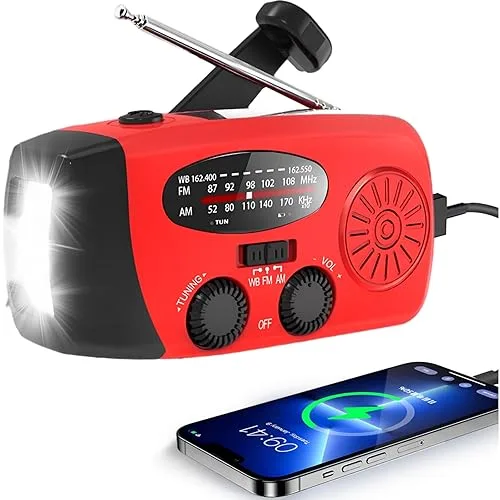
Solar Hand-Crank NOAA Weather Radio
AM/FM + NOAA weather band, solar, hand crank and USB. Built-in flashlight
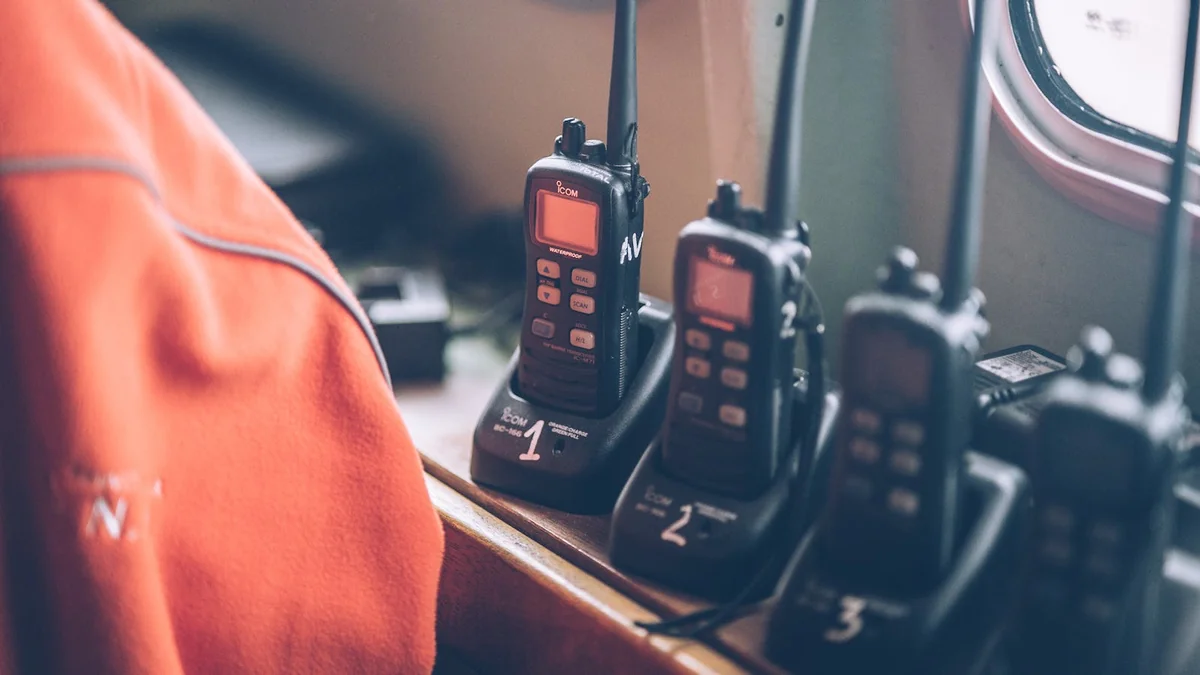
Walkie-talkies: short-range family comms
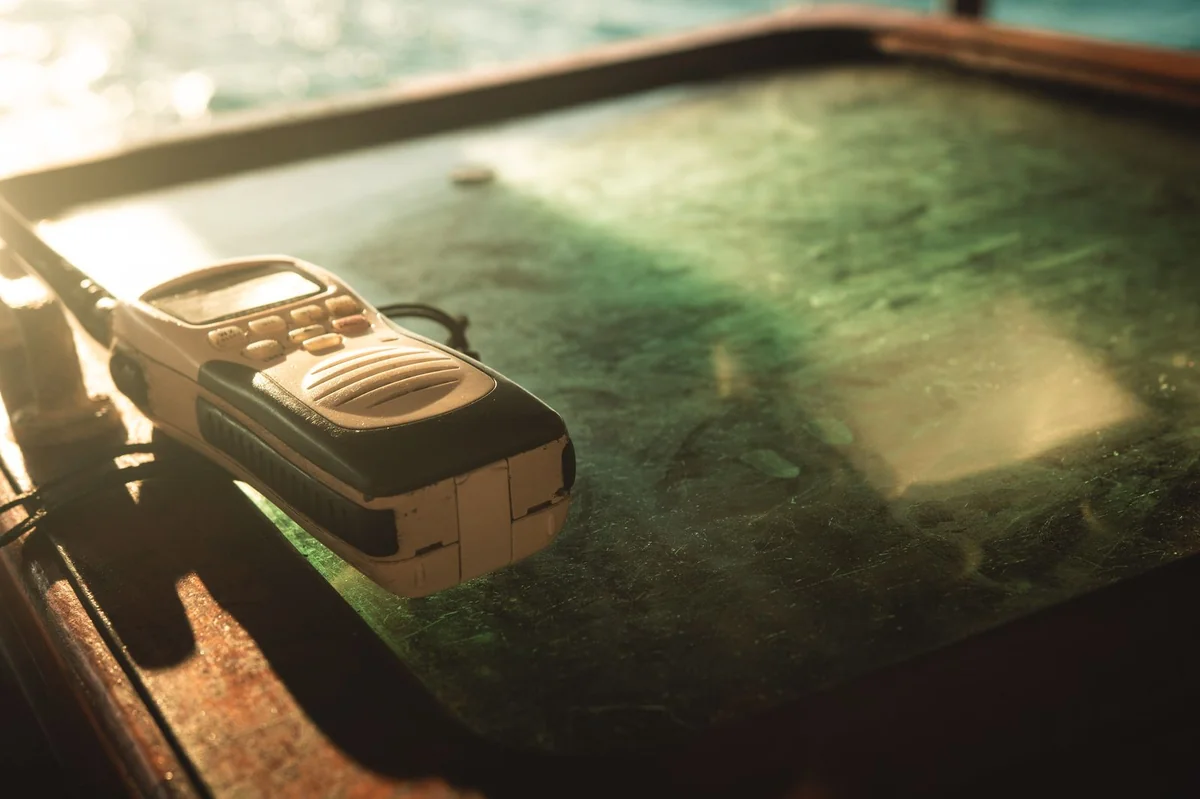
FRS (Family Radio Service) walkie-talkies are license-free in the US, share 22 channels, and are capped at 2 watts. Real-world range is about 0.5 to 2 miles in the suburbs — far less than the "36-mile" numbers on the box. If you need more range, GMRS (General Mobile Radio Service) allows higher power and repeaters but requires a $35 FCC license (no test, covers your whole household for 10 years).
- Main use: coordinating family members in different places — one at home, one picking up the kids, one getting supplies.
- Advantages: they depend on no infrastructure, run on AA or rechargeable batteries, and are intuitive to use.
- Limitations: limited range, especially in cities with tall buildings. Not for long-distance contact.
- Tip: agree on a channel and a simple code with your family before an emergency, so you are not scanning 22 channels looking for each other.
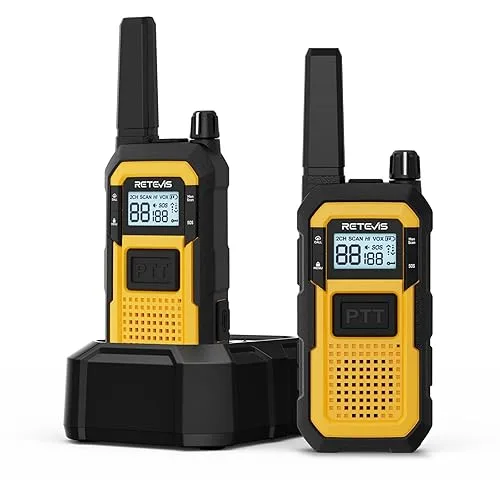
Retevis RB48 FRS Walkie-Talkies
License-free FRS pair, IP67 waterproof and rugged. For coordinating the family without cell service
Family communication plan
Beyond the devices, you need a family communication plan. It defines how you will reach each other and where you will meet if an emergency hits while you are apart. FEMA's Ready.gov publishes a free fill-in template, and the American Red Cross recommends practicing it at least once a year.
Elements of the plan
- Primary meeting point: a spot near home to regroup if you have to evacuate (a mailbox, a neighbor's driveway, the corner of the block).
- Secondary meeting point: a backup location across town in case the neighborhood is affected.
- Out-of-area contact: pick a relative or friend in another state as the family "switchboard." Everyone calls or texts that person to check in — long-distance circuits often work when local ones are jammed, as seen on 9/11 and during Hurricane Sandy.
- Emergency numbers: carry a printed card with key numbers. Your phone can die.
US emergency numbers
- 911: all emergencies (fire, police, medical). Works from any phone, even with no active plan.
- 988: Suicide & Crisis Lifeline (call or text).
- 211: community services and local disaster information (United Way).
- 511: traffic and road conditions, including evacuation routes.
- 1-800-222-1222: Poison Control.
- 1-800-621-3362: FEMA disaster assistance helpline.
Print these and put them on the fridge, in your go-bag, and in your wallet. When your phone is at 3% is not the time to be searching the internet for a number.

Acme Tornado 2000 Emergency Whistle
Pealess, extremely loud, works wet. The simplest, most reliable way to signal for help
Your smartphone in an emergency
Your smartphone is powerful but fragile: it depends on its battery, on coverage, and on network infrastructure. To get the most out of it during an emergency:
- Switch to Low Power Mode immediately. Drop the brightness, close background apps, and turn off Wi-Fi and Bluetooth when you are not using them.
- Text instead of calling. SMS uses far less power and gets through more reliably on overloaded networks than a voice call.
- Turn on Wireless Emergency Alerts (WEA) in your phone settings, and sign up for your county alert system (Nixle, CodeRED, or Everbridge).
- Keep a charged power bank. See our energy guide to pick the right one.
- Download offline maps of your area in Google Maps or an offline map app. If you have to move without cell data, offline maps are essential.
Quick checklist: your communication kit
- 1 AM/FM/NOAA radio with battery, solar, and hand-crank power
- Spare batteries for the radio
- A pair of FRS (or GMRS) walkie-talkies with batteries
- Printed card with US emergency numbers and your family contact plan
- A charged power bank for your phone
- Offline maps downloaded to your phone
- A loud emergency whistle
Communications are the category most families forget when they build an emergency plan. Yet knowing your kids are safe, receiving instructions from the National Weather Service, or being able to call for help can be the single most important thing in the first hours of a crisis. The emergency planner includes communication gear tailored to the scenario you set up.
Sources: National Weather Service (NWS), FEMA / Ready.gov, American Red Cross, FCC.
Frequently asked questions
What is the best NOAA weather radio?
The three NOAA radios most-recommended by US preppers and meteorologists are the Midland WR400 ($60, SAME-programmable, AM/FM/NOAA, AC + battery), the Eton FRX5-BT ($100, hand-crank + solar + AC, Bluetooth, USB-out for phone charging), and the Sangean MMR-88 ($60, lightweight, 7 NOAA channels, crank + solar). For most households the Midland WR400 wins because of SAME (Specific Area Message Encoding), which silences alerts from neighboring counties so you only hear ones relevant to you. After Hurricane Helene (2024), NWS warnings via NOAA radio reached residents whose cell service was already dead. The American Red Cross sells a co-branded Eton model that adds a strobe and is a strong evac-bag choice.
FRS vs GMRS vs MURS: which radio should I buy?
FRS (Family Radio Service) is license-free, capped at 2W, and good for ~0.5–2 miles in suburbs — Midland T71VP3 or Motorola T100, $40–$60 pair. GMRS (General Mobile Radio Service) needs a $35 FCC license (no test, covers whole family for 10 years), allows up to 50W on mobile units, and reaches 1–5 miles handheld or much further via repeaters — Midland MXT500 mobile or Wouxun KG-805G handheld. MURS (Multi-Use Radio Service) is license-free in VHF (151–154 MHz), penetrates trees and buildings well, capped at 2W — Motorola RDM2070d, $200+. For a typical US family, get GMRS: $35 license, 5x the range of FRS, works during Hurricane Helene-style infrastructure failures.
Recommended products
Compare prices and availability on Amazon.com
Garmin inReach vs Zoleo vs Apple Satellite SOS: which is best?
For real wilderness or grid-down two-way satellite messaging, the Garmin inReach Mini 2 ($400 + $15–$65/month) is the gold standard — global Iridium network, dedicated SOS button to GEOS, 14-day battery, weather forecasts, route tracking. Zoleo ($200 + $20–$50/month) is cheaper and pairs with your phone over Bluetooth but does not work standalone. Apple Satellite SOS (free for 2 years on iPhone 14+, then $5/month rumored) is the easiest because it is already in your pocket but only supports emergency texts to 911 and short Find My pings. After Hurricane Helene (2024), Apple Satellite SOS handled thousands of calls for help in western NC where cell coverage failed for days. For frequent backcountry use, get inReach; for grid-down household backup, the iPhone is now enough.
Will Starlink work during a hurricane?
Yes, and it is now standard hurricane gear in the US Southeast. Starlink Mini ($499 hardware + $50–$165/month) ran continuously during Hurricane Helene (2024), restoring internet to thousands of homes in western NC and TN where every other ISP went dark for weeks. The dish runs on 12V DC (avg 25–40W, peak 60W) so a Jackery 1000 or EcoFlow Delta 2 can power it for 24+ hours, and a 200W solar panel can run it indefinitely. Performance during the storm itself can be degraded by heavy rain — fade margins drop and speeds slow — but it works. Mount the dish with clear sky view away from trees. Order weeks ahead of hurricane season; SpaceX activations spike in June and units sell out.
How do I create a family emergency communication plan?
Follow the Ready.gov template (free PDF download from ready.gov/plan). Steps: 1) Pick one out-of-state contact everyone calls or texts to check in — long-distance circuits often work when local ones are jammed, as observed in 9/11 and Hurricane Sandy. 2) Designate two meeting points: one near the home (mailbox, neighbor) and one across town in case the neighborhood is evacuated. 3) Print pocket-size contact cards with phone numbers, addresses, medical info, and the out-of-state contact. 4) Pre-register everyone for Wireless Emergency Alerts (WEA), your county alert system (Nixle, CodeRED, or Everbridge), and the American Red Cross Safe and Well registry. 5) Practice annually. After Hurricane Helene (2024), families with rehearsed plans reconnected within hours; the rest took days.
Recommended products
Compare prices and availability on Amazon.com
Verified Communication Products
Browse our curated catalog of emergency radios, walkie-talkies, and communication gear on Amazon.
View communication products →Our recommendation
If you do only one thing, get an emergency radio with battery or hand-crank power. When the grid is down and cellular networks are overloaded, AM/FM and NOAA alerts are still one of the most reliable ways to know what is happening. The EmergencyKitLab planner includes communications gear in its recommendations and adapts it to your scenario.
Calculate exactly what you need
Our planner adjusts quantities to your family and situation.
Build your personalized plan